
Roof Flashing Repair in Rancho Cucamonga, CA
When a service shop has a drip near a skylight, another bead of caulk around the frame rarely fixes it. Water can get in through the glass, the frame seals, the curb, the roof flashing, or a seam a few feet upslope. Each of those calls for a different repair, so the first job on the roof is figuring out which one is leaking.
That is how we approach flashing work in Rancho Cucamonga. We look at skylight curbs, pipe boots, equipment penetrations and wall flashings, then tell you plainly what we found and what it will take to fix it. You get a clear scope: what needs to be rebuilt now, what belongs to another trade, and what we still can't confirm until we open it up.
Locate the interface
We start by matching the stain or drip inside to what sits above it on the roof. Water often runs along the deck or under insulation before it shows up on a ceiling tile, so the spot where it drips is not always where it gets in. We take wide photos to show location and close-ups of each suspect detail, and we ask about past repairs and any recent HVAC or electrical work on the roof.
Our leak repair crews trace that path before deciding where to work. If a water test will help, we pick a method that suits the roof and protect the space below while we run it. Our report tells you what we confirmed and what still needs a second look.
Examine the curb and frame
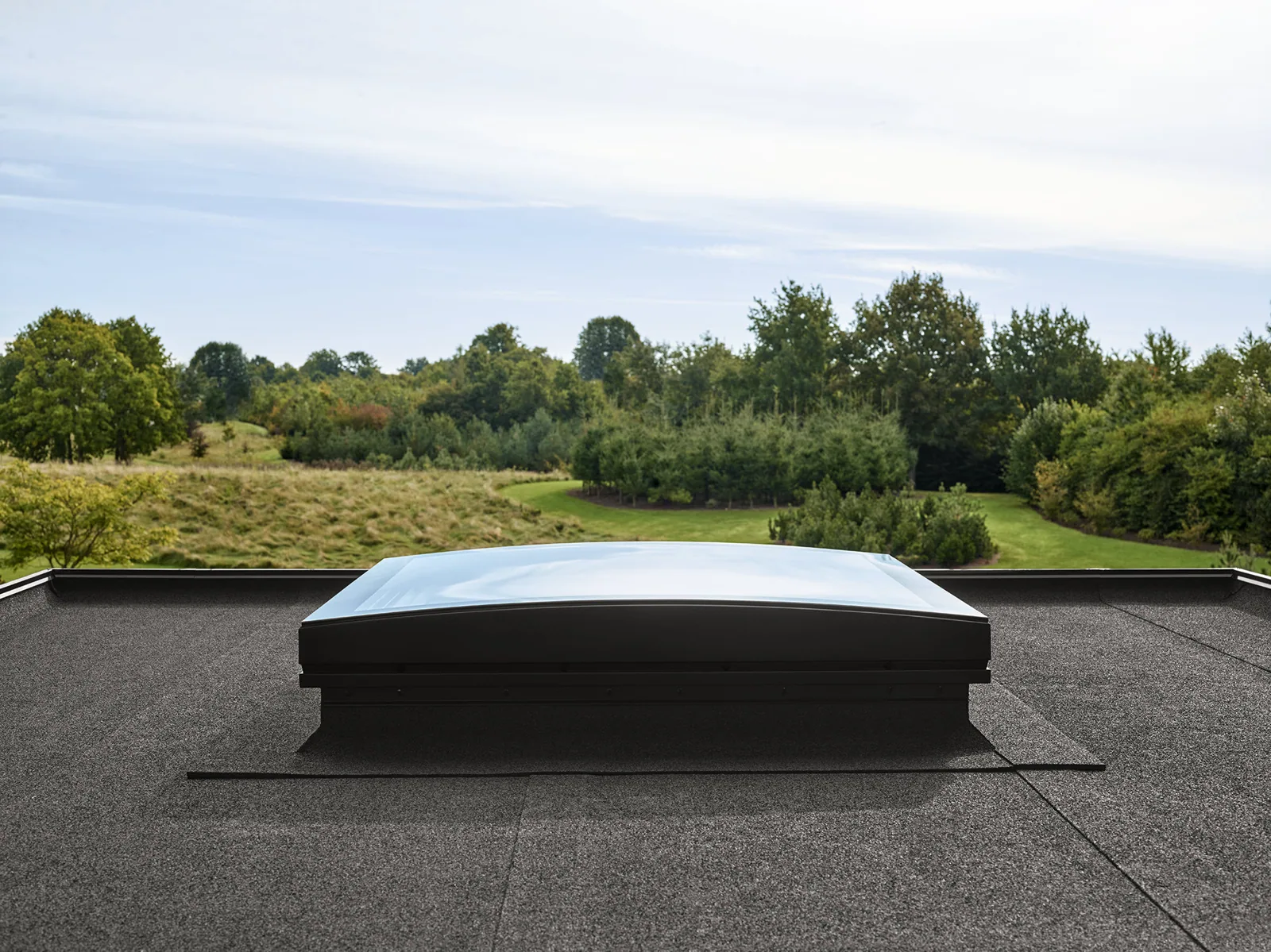
A skylight is more than a hole in the membrane. The glass, frame and seals are usually a skylight supplier's work, while the curb and the flashing around it are roofing work. We separate those in the estimate so you aren't paying a roofer to chase a frame leak, or the other way around. We also protect the opening while crews work near it.
A rotted curb, or one that is too short, makes good flashing hard to install. We measure curb height and check its condition before rebuilding anything. If you are planning a roof recover, the extra insulation and membrane raise the roof surface and leave less curb exposed above it. Curbs often need to be raised, and skylights or units reset, before the new layers go down.
Before we pick a repair, we note the skylight size, curb height, frame condition and how close the nearest seams are. We look for signs that water is coming in at the frame, at the joint between roof and curb, or upslope and running under the membrane to the opening. An interior stain points us in the right direction but doesn't settle the question on its own. Photos from all four sides make the comparison easier. If the glazing, frame or framing below needs replacing, we list it separately so it's clear our flashing price doesn't cover that work.
Rebuild the roof connection
How we flash a curb depends on the roof system, what's underneath it and the materials going back on. A TPO roof needs TPO flashing heat-welded to clean, compatible sheet. Modified bitumen, EPDM and coated roofs each have their own prep and seaming methods. Your estimate will name the method, not just promise a sealant patch that supposedly works on any roof.
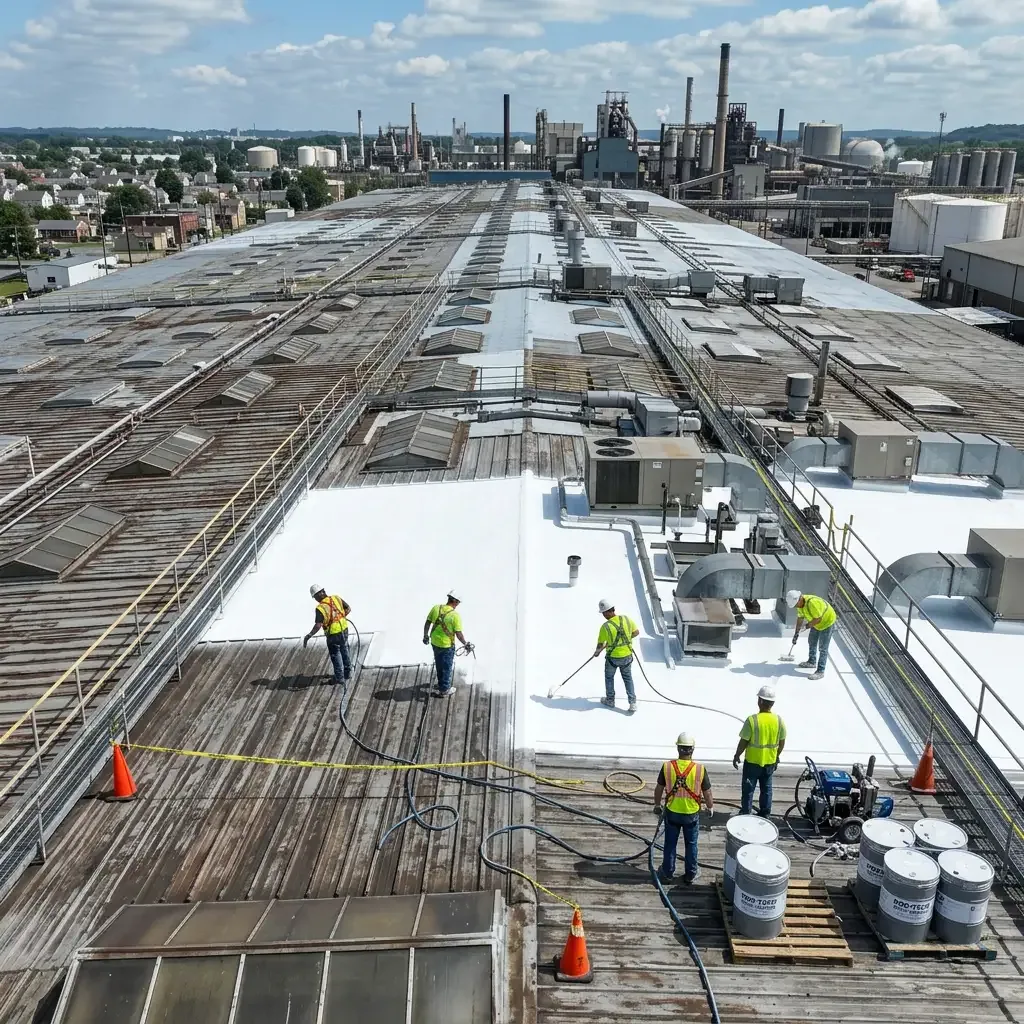
Corners and the top edge of the flashing are where most failures start, because that is where the material folds and moves. If the flashing has pulled loose or the wood behind it is soft, a coat of mastic won't hold. Our flashing repair work rebuilds what failed, and the estimate shows what we're keeping, what we're replacing, and the prep work included in the price.
Coordinate equipment work
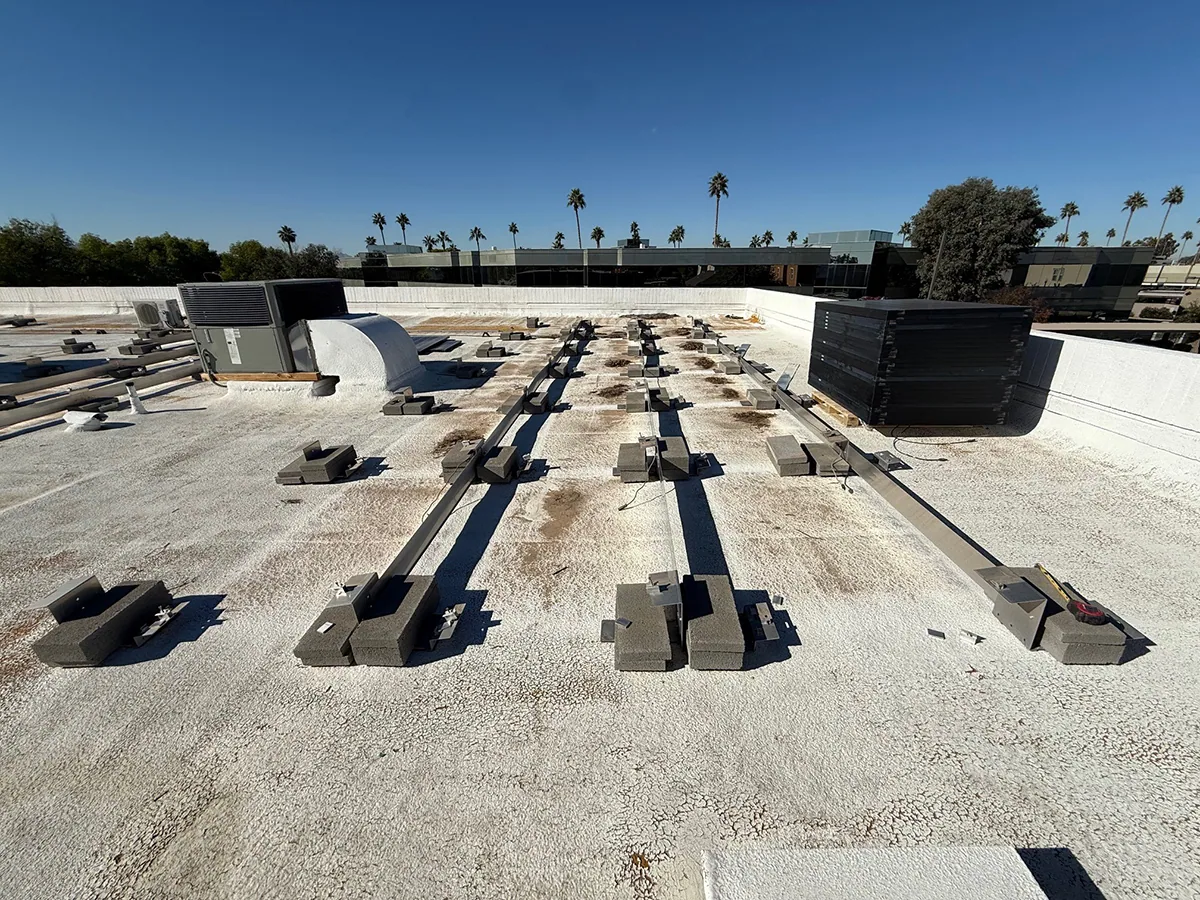
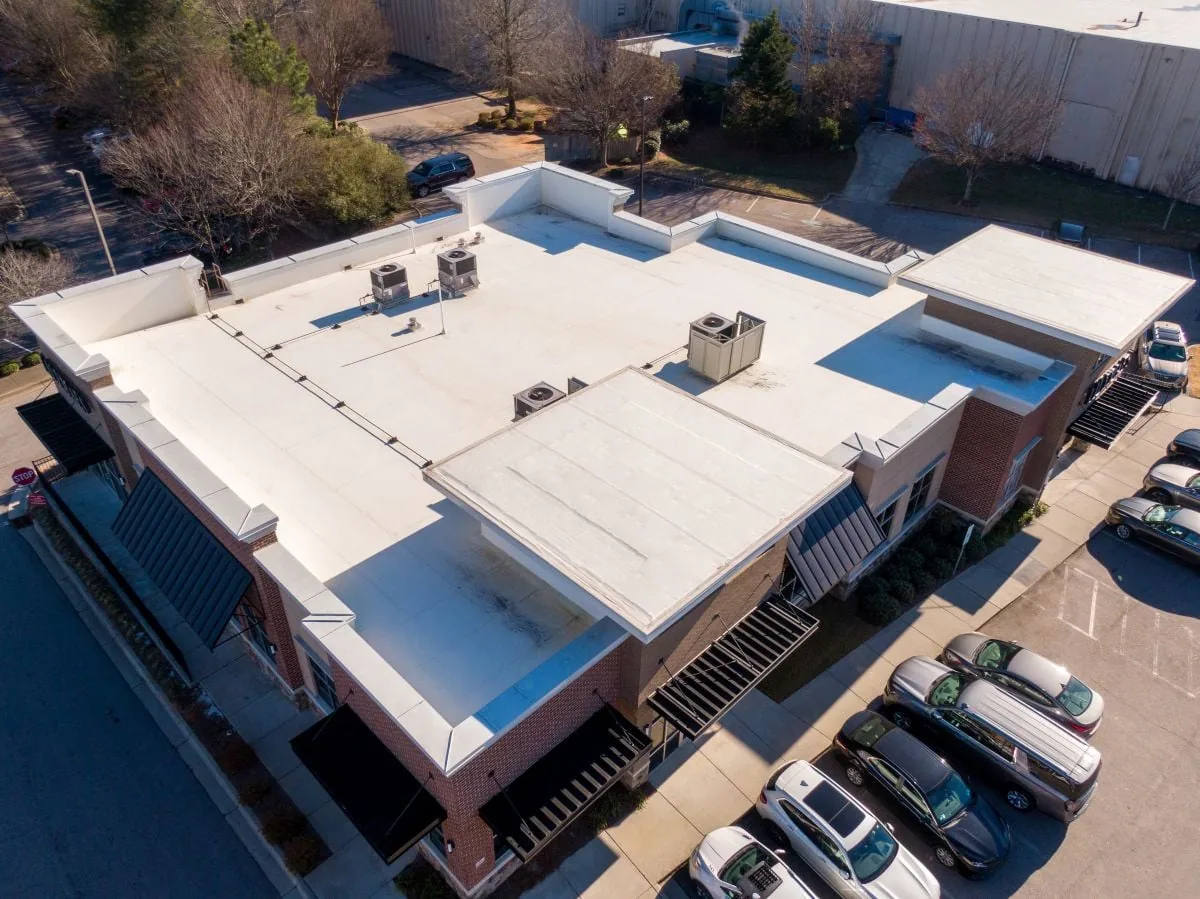
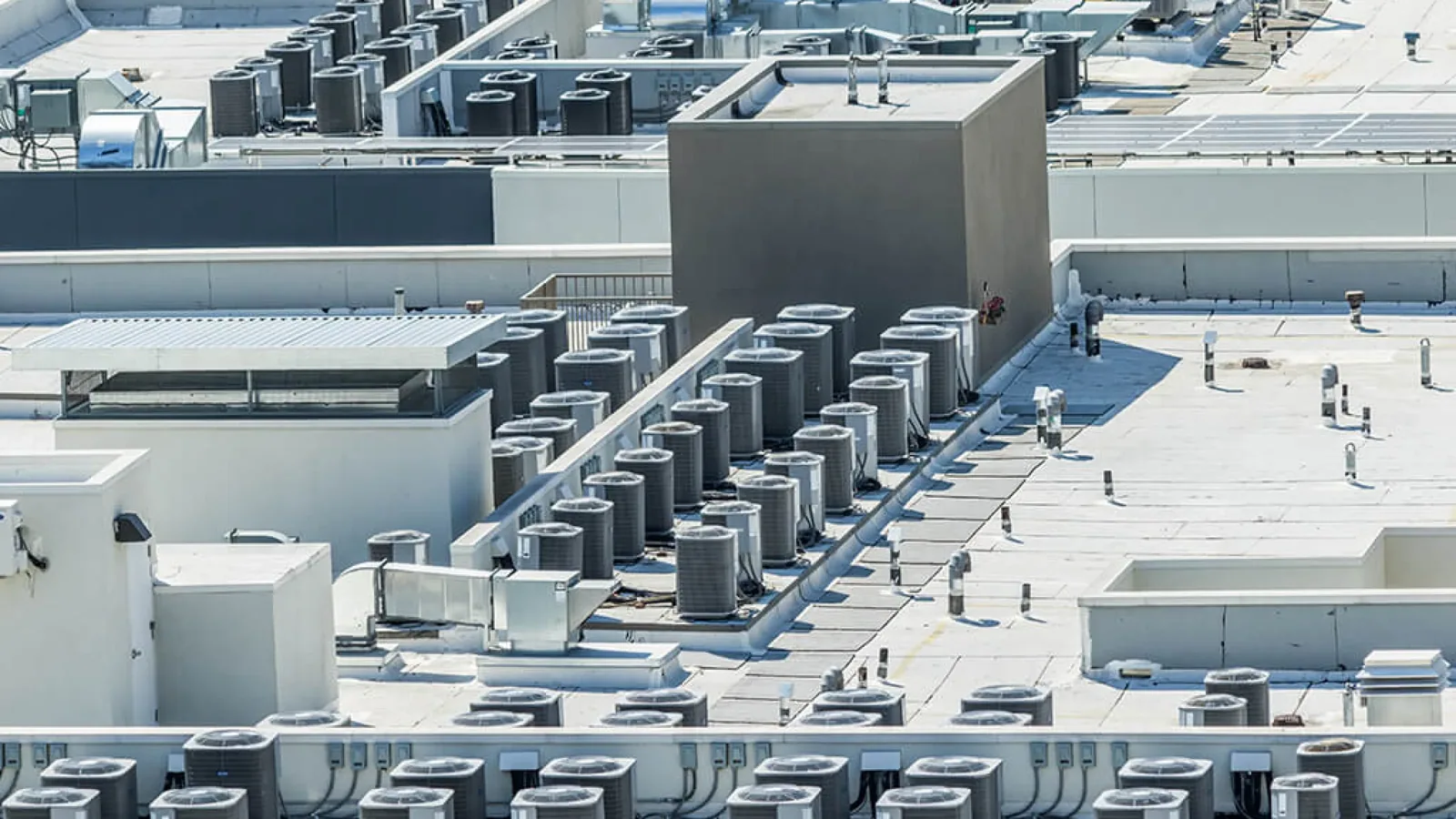
When flashing work around a rooftop unit means disconnecting it, lifting it or shutting it down, the mechanical contractor needs to be involved. Our crews don't unhook gas lines or rewire controls. We set a date with your HVAC contractor and build the roofing schedule around their visit.
On an industrial building near Milliken Avenue, we'll ask what runs under the affected unit and when it can be shut down for service. For a building in the Ontario logistics corridor, we confirm gate hours, truck traffic and site check-in rules with the people who run the facility. Then the plan shows where materials will be staged and whether any area below needs to be blocked off while we work.
Check the surrounding assembly
A penetration that leaked for a while may have soaked the insulation around it. We cut test cores where it makes sense to see what's wet and how far it has spread. A core only tells us about that spot, so a few readings in a ring around the curb help map the edge. An infrared scan can help on larger areas, but we confirm what it shows with cores before pricing replacement.
If wet material has to come out, we can replace the insulation and cover board as part of the same repair. We also look at drainage. Water that ponds against the upslope side of a curb will keep testing the flashing, and a small cricket can send it around the curb instead. We check that before calling the flashing the only problem.
Schedule for the materials
Rancho Cucamonga's hot summers and wetter winter months shape when we schedule this work, but the deck temperature, moisture and the manufacturer's instructions decide the actual day. Adhesives, primers and coatings each need certain conditions to set properly. A sunny morning isn't enough by itself. We'll tell you what conditions the job needs and what happens to the schedule if the weather won't cooperate.
On a commercial building in Upland, we'll confirm roof access, lift placement, what's going on in the space below, and who on site we should call. If the parapet or roof edge near the skylight also needs work, our edge metal and coping crew can fix it in the same visit, so you're not left with a leak a few feet away from a new curb.
Keep a useful repair file
We photograph the prep work and any wood or insulation repairs before they get covered up, and then the finished flashing. The closeout lists the materials used and each location we worked on. If anything was left out of our scope or still needs checking, it's written down with a recommended next step. When a skylight company is fixing the frame or glass separately, we keep their scope alongside ours, so you can see which contractor handled which part and nothing gets missed between the two jobs.
Your roof file should also note any equipment changes made by other trades after we leave. A new conduit run or a unit swap can disturb a good flashing, and a record of that work helps tell a new leak from an old one. Keep the warranty and product paperwork that matches what was installed. If a drip shows up again, that file tells the next crew where to start looking.
Commercial Roofing Questions
Is the skylight always the source of a nearby drip?
No. A drip near a skylight is a good clue, but water can enter at a seam, pipe boot or curb several feet away and travel under the membrane before it shows up. We check the frame, curb, flashing and nearby details before deciding where the repair goes.
Can a curb remain during reroofing?
Sometimes. If it's solid and still tall enough once the new insulation and membrane go on, it can stay. Many curbs need to be raised or rebuilt, and skylights or rooftop units may need to be reset, so we sort that out with the other trades before the new roof goes down.
Why does preparation appear in the price?
Because new flashing only holds if what's under it is clean, dry and solid. That can mean cleaning old sheet, cutting out loose flashing or replacing rotted wood before anything new is installed. We list that work so you can see what you're paying for.
What if equipment cannot be stopped?
We work it out with you and your HVAC contractor before scheduling. Some repairs can be done with the unit running; others need a short planned shutdown, often at night or on a weekend. The estimate says which one your job needs.
What helps when a drip returns?
Keep our closeout photos and repair notes, write down when and where the new drip appeared, and note any work other trades have done on the roof since. That points the next inspection in the right direction. A new drip near an old repair doesn't always mean the repair failed.
Find the connection worth fixing
Schedule a roof inspection for the leak around your skylight or penetration. We'll find where the water is getting in, explain the fix and any other trades involved, and give you a clear estimate before any work starts.