
Modified Bitumen Roofing in Rancho Cucamonga, CA
An owner looking at a modified bitumen roof may see a sound-looking field and a complicated group of repairs around one drain. The useful question is how those layers connect and whether the detail can be corrected locally. A surface photograph does not identify every hidden ply or explain which application method is suitable for the next repair.
Our Rancho Cucamonga modified bitumen review examines accessible condition and available records before defining the work. We identify the existing materials, supporting questions and proposed method. The owner receives a practical explanation of what is worth fixing, what needs further examination and when a broader scope deserves comparison.
Compare the proposal with a specified built-up system through their actual layer and application arrangements. A PVC alternative introduces another connection process. The owner needs each option's preparation and operating provisions explained because the same measured roof can require different construction methods.
Identify the membrane layers
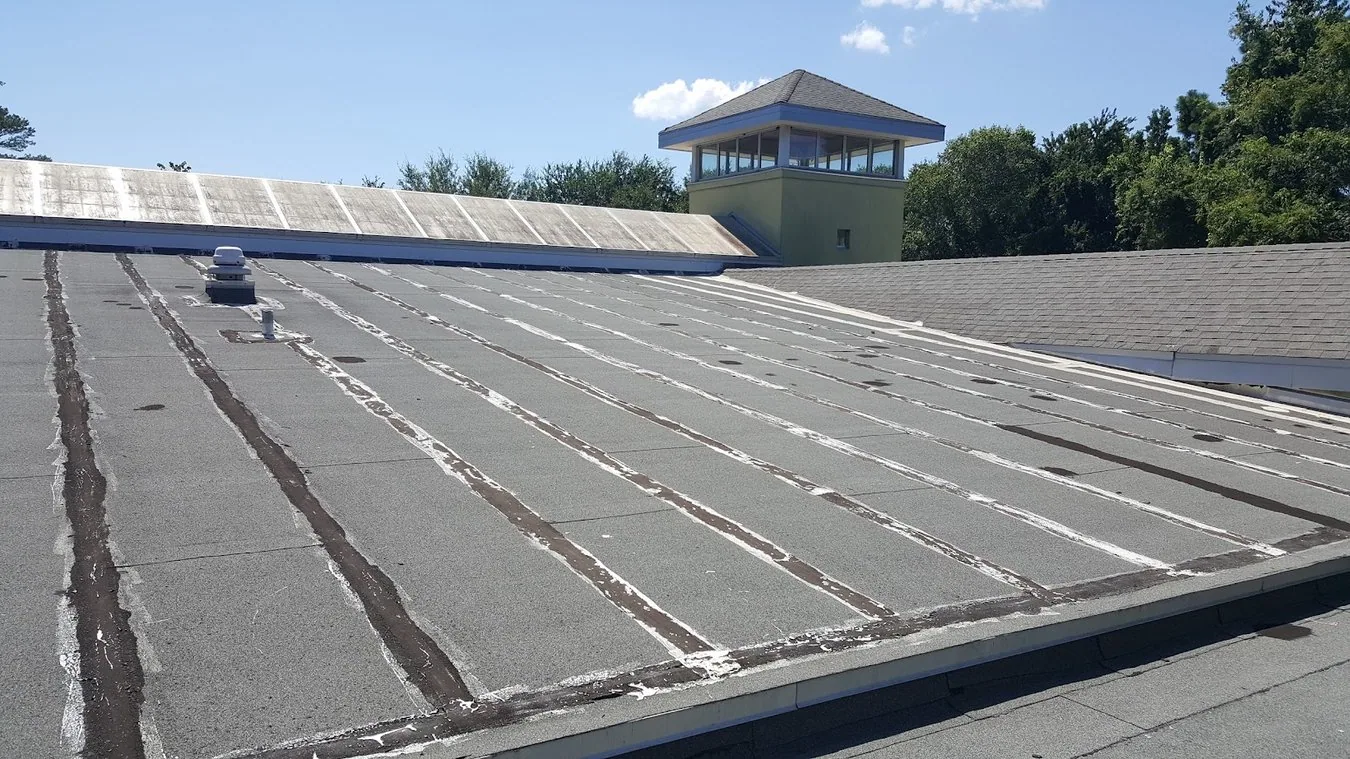
Modified bitumen roofing uses asphalt-based membrane materials modified for the particular product. Systems differ in components, reinforcement, surface finish and installation procedures. Identify the existing construction and selected repair materials before choosing a method. The general roof label is not a complete assembly description.
Earlier patches can conceal another layer or leave an unsuitable surface for the proposed correction. Review accessible repairs and the available file. Where a sample is needed, arrange authorization and compatible restoration of the opening. The finding establishes local information and may prompt further checking. The proposal should explain that evidence before estimating removal across areas that were not examined.
Match the application method
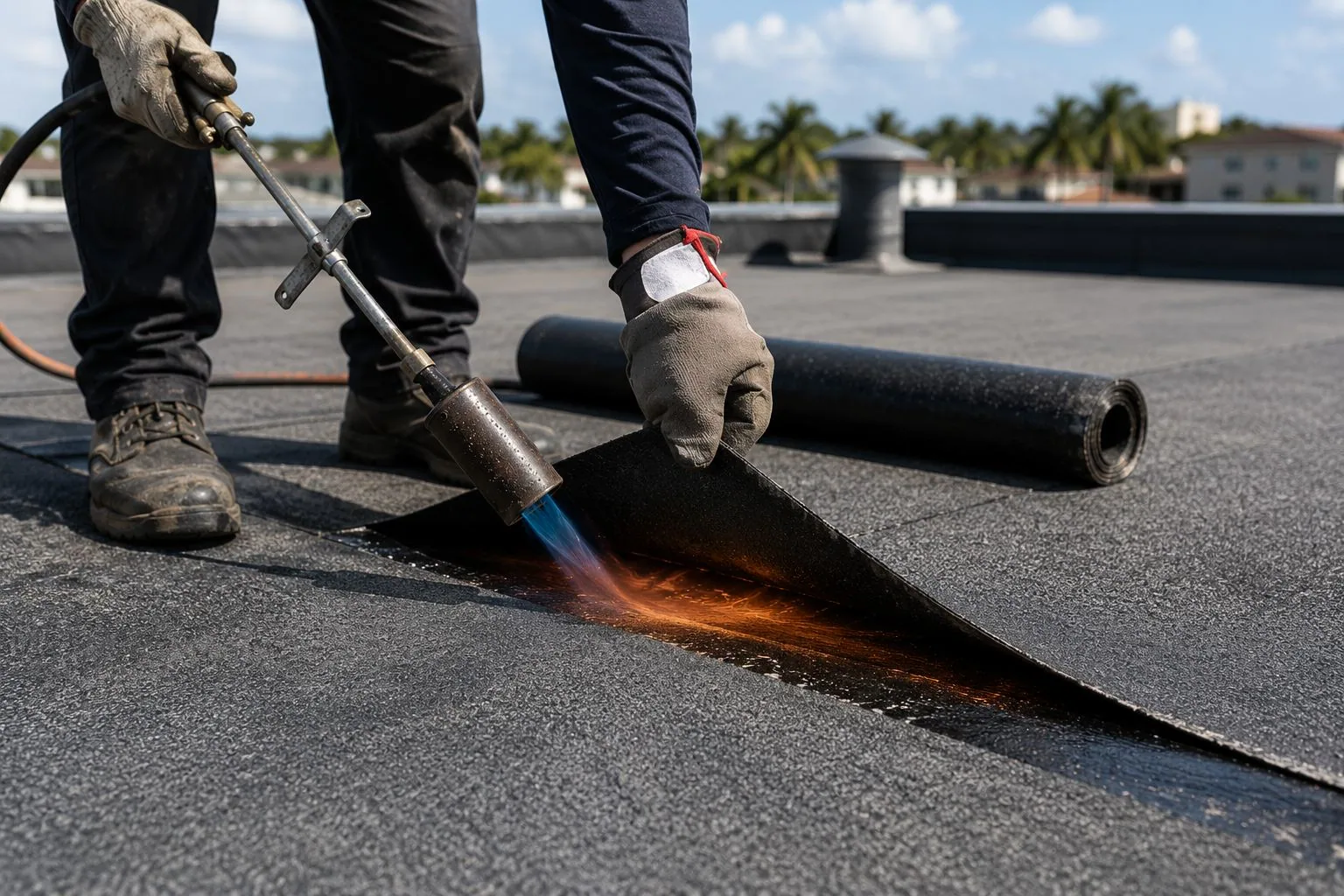
Products may use specified heat-applied, cold-applied, self-adhered or other installation arrangements. The selected system determines the suitable method and preparation. Do not assume every modified bitumen repair requires a torch or that every available adhesive fits the existing roof. Review substrate, surface condition and product instructions together.
If the method introduces flame or other special hazards, the project needs appropriate controls, permissions and trained personnel. Occupied building conditions can affect the choice. Our occupied roof planning identifies the necessary coordination, rather than relying on a generic statement that a familiar material is straightforward to install. The method belongs in the owner’s scope alongside the intended correction. Identify nearby materials, openings and occupied spaces that influence the procedure. Where the project requires special permits or monitoring for the chosen application, include those tasks and responsible personnel before pricing is finalized. A method change can affect more than the roofing material itself: it may alter access, coordination and the work window. The owner should be able to see that consequence when comparing alternatives, rather than discovering it during the repair after the scope has already been approved.
Application planning should match the selected sheet and its approved installation instructions. Where heat is used, establish fire prevention, trained supervision and protection for combustible materials before work begins. Cold-applied or self-adhered methods have their own substrate and weather limits. The proposal should name the intended method and avoid implying one process suits every existing roof.
Give repairs a defined purpose
Examine the accessible concern and its surroundings. An open lap, damaged flashing or surface defect may have different causes and treatments. A blister is not automatically a reason to remove the field, and a clean-looking cap sheet does not settle hidden-layer condition. The report should explain what the finding means and which additional check would change the proposed work.
Our planned membrane repair identifies preparation, compatible materials and completion checks. If an interior drip is active, source examination remains necessary. A nearby roof mark can be relevant without proving the entry point. Connect the repair to the investigation so the owner understands why the chosen location and method are useful.
Address supporting damage
Moisture or deck questions require suitable investigation where they affect the scope. Samples, instruments and thermal screening have their own limits. Thermal patterns need interpretation and confirmation; sampled locations do not decide the condition of every retained layer. Keep confirmed findings and estimated extent distinct in the report.
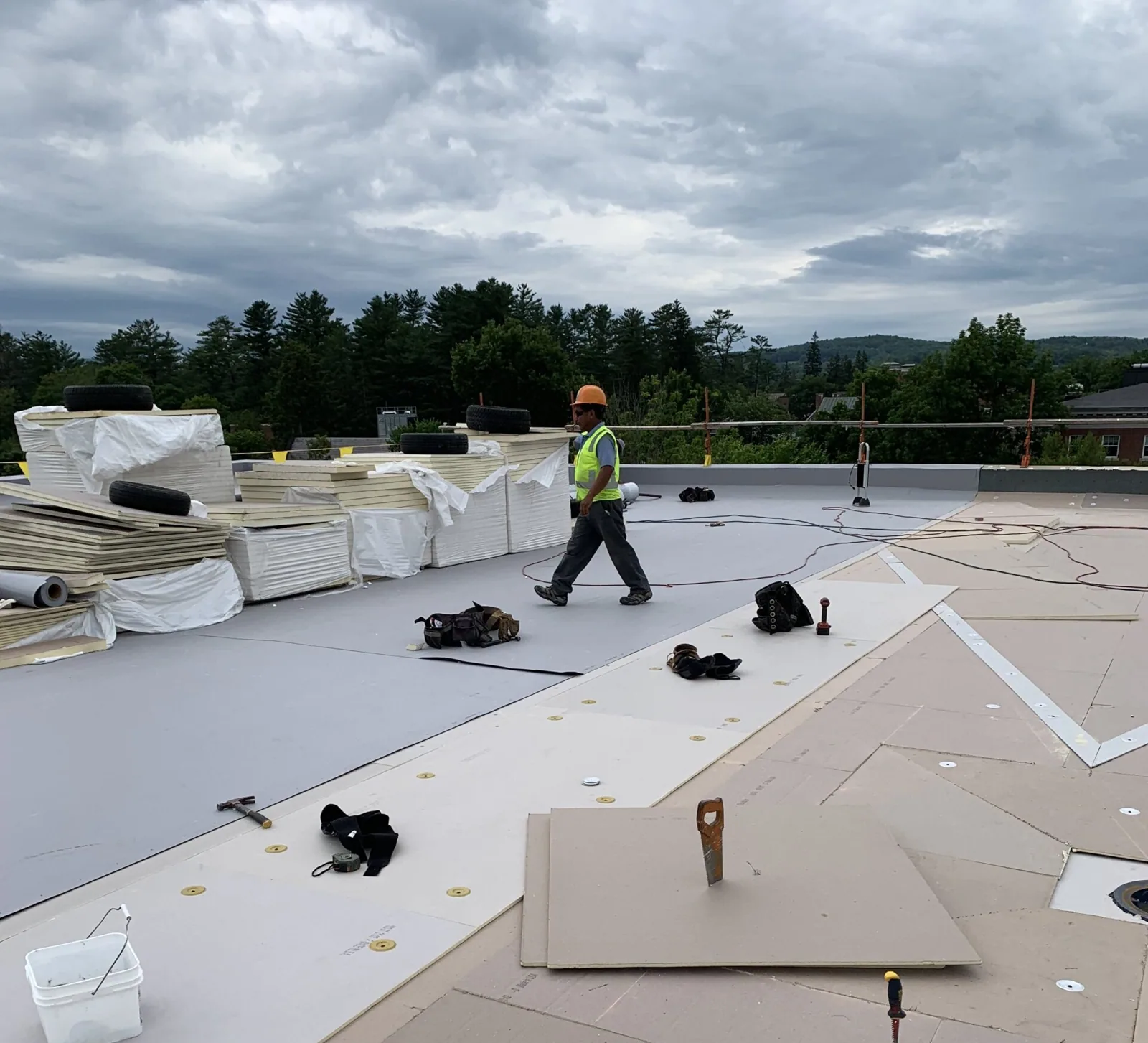
Where rebuilding is justified, our insulation and supporting board work can define the affected layers. A replacement comparison should show removal and deck examination, while a recover option must establish suitability of what remains. Include the supporting work in each price so a lower membrane figure does not hide an unresolved assembly concern.
Review water and interfaces
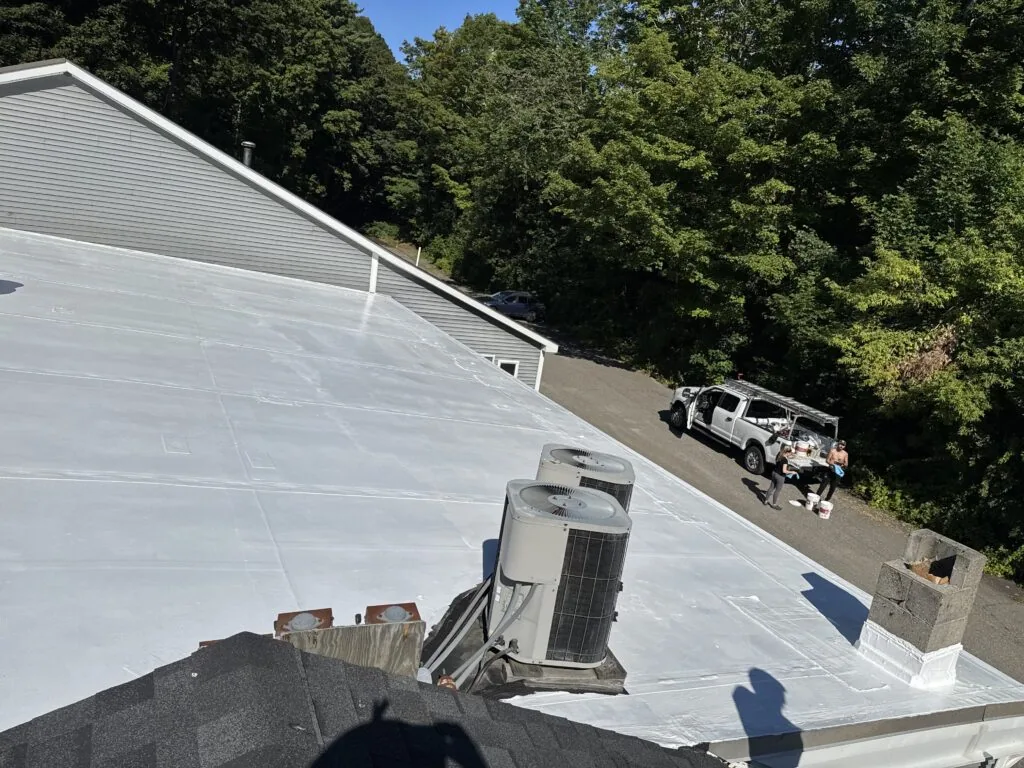
Outlets, walls, curbs and edges must fit the finished assembly. Added layers can change drainage and usable flashing height. Measure the accessible relationships and identify required adjustment before installation. A material choice does not correct slope or a concealed pipe restriction. Those questions need their own investigation and appropriate professionals.
At a commercial property in Cucamonga along Foothill Boulevard, coordinate the working area with tenant access. At an industrial building in Etiwanda, confirm equipment and truck routes with the operator. Those arrangements help define a manageable sequence. The actual roof dimensions and activities guide it, rather than an assumed assembly or schedule based on the district.
Consider the finish and requirements
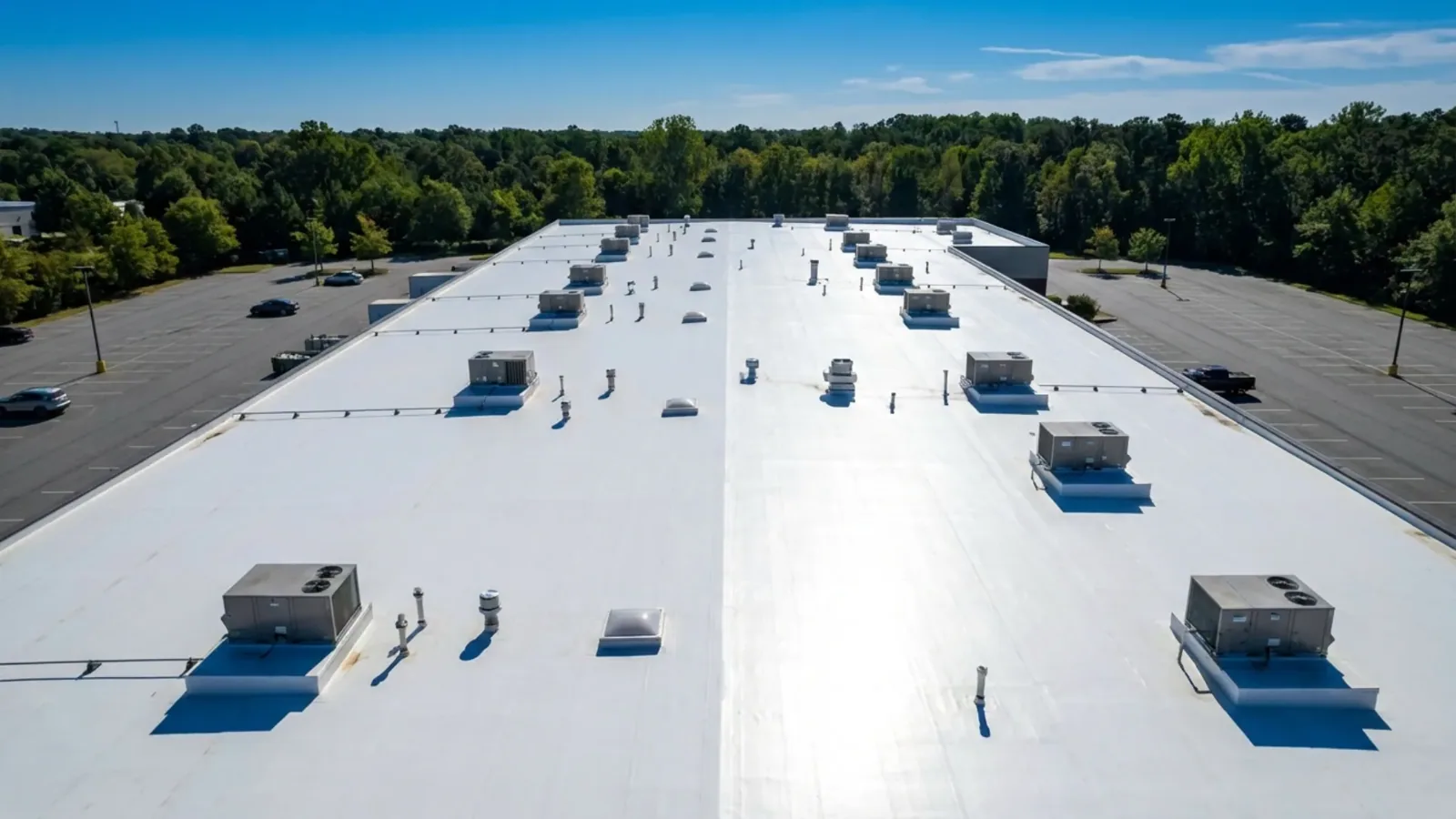
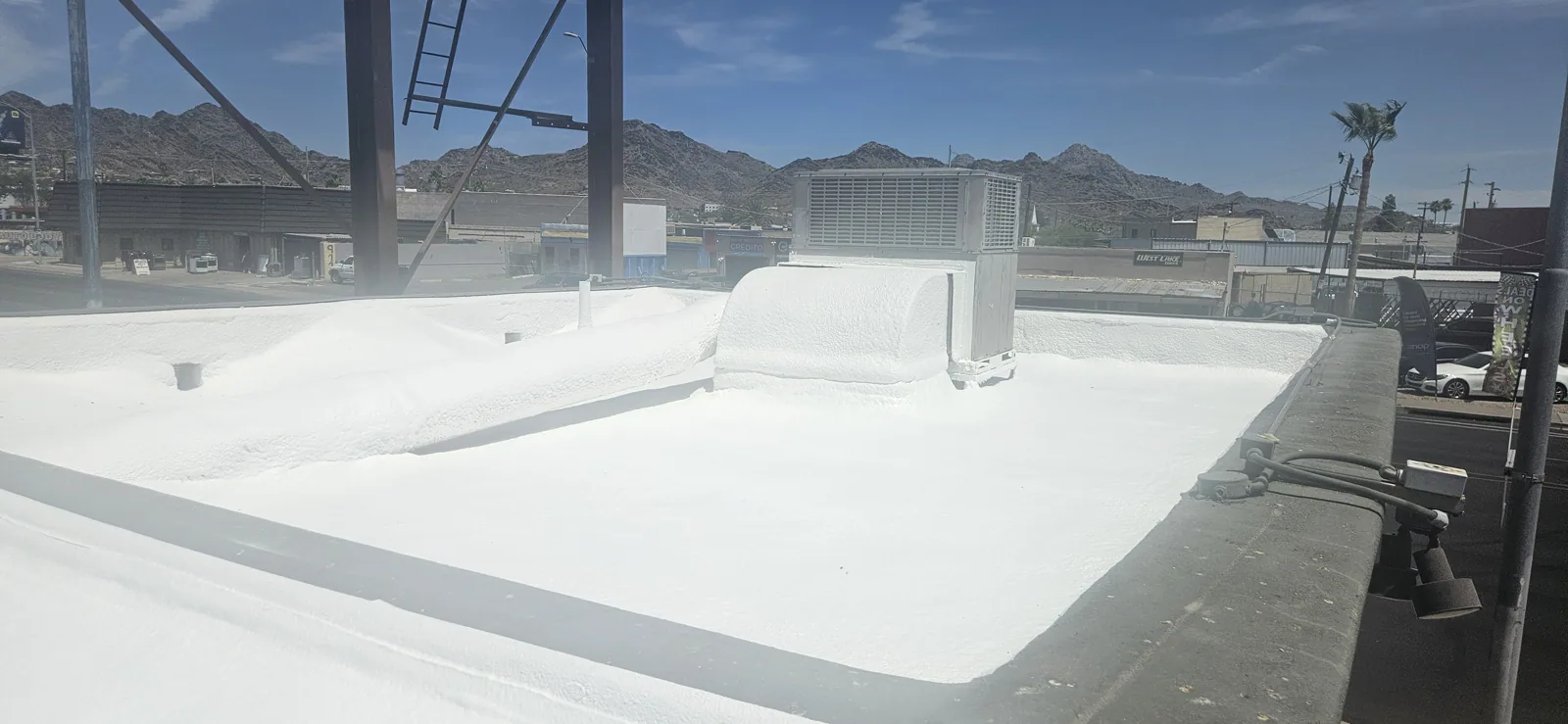
The selected surface finish may have performance or maintenance requirements relevant to the project. Where reflective properties are proposed, review the actual product and applicable California roof energy provisions. Building and work scope affect requirements, including appropriate compliance approaches or exceptions. A coating over the surface needs compatibility review rather than being treated as a universal upgrade.
Rancho Cucamonga's hot summers and cooler-season rain influence planning, while material instructions and current conditions determine readiness for work. Preparation, cure and joining methods differ. The sequence should identify the suitable window and necessary protection for opened areas. Explain how changing conditions will be handled instead of offering a fixed dry-in or completion assurance.
Retain the layer history
Photographs of preparation and concealed work help explain the completed assembly. Retain the selected materials, installation method and repair locations with relevant checks. Manufacturer and workmanship coverage follow the actual documents and project terms. Keep upkeep requirements with those records so later maintenance uses the right instructions.
A maintenance plan can compare accessible laps, flashings and outlets with earlier findings. Record later equipment work and any new concern. The next roof walk then starts with a known layer history and a clear account of prior corrections. That helps the owner choose work worth doing rather than adding another unexplained layer to the same detail.
Commercial Roofing Questions
Does every modified bitumen roof use a torch?
The selected products and assembly prescribe the suitable application method. Other arrangements may be available where appropriate. Identify the existing material, conditions and method before treating a familiar roof label as an installation instruction.
Should a blister always be cut out?
Its significance and suitable treatment require examination of the surrounding assembly. A surface observation alone does not establish the hidden condition or whole-roof scope. The recommendation should explain the proposed correction and any needed checking.
Can another layer be added?
Recover suitability involves existing conditions, retained layers and applicable project requirements. Before covering is recommended, explain why the retained construction can serve as a suitable base and which corrections it requires. Naming the new membrane does not answer those questions.
What affects occupied work?
Application method, access, conditions and activities below influence the plan. Relevant trade and building controls need coordination. The scope identifies restrictions and protection rather than assuming every task can proceed around normal operation.
What makes future repairs clearer?
Keep the materials, layer findings, application method and completed locations in the roof file. Add later changes and inspection notes. That history helps a future correction use compatible procedures and address the current concern.
Get the layer scope straight
Arrange a roof walk to examine the membrane and its details. We will explain useful corrections, suitable methods and the supporting checks needed before choosing repair or broader work.