
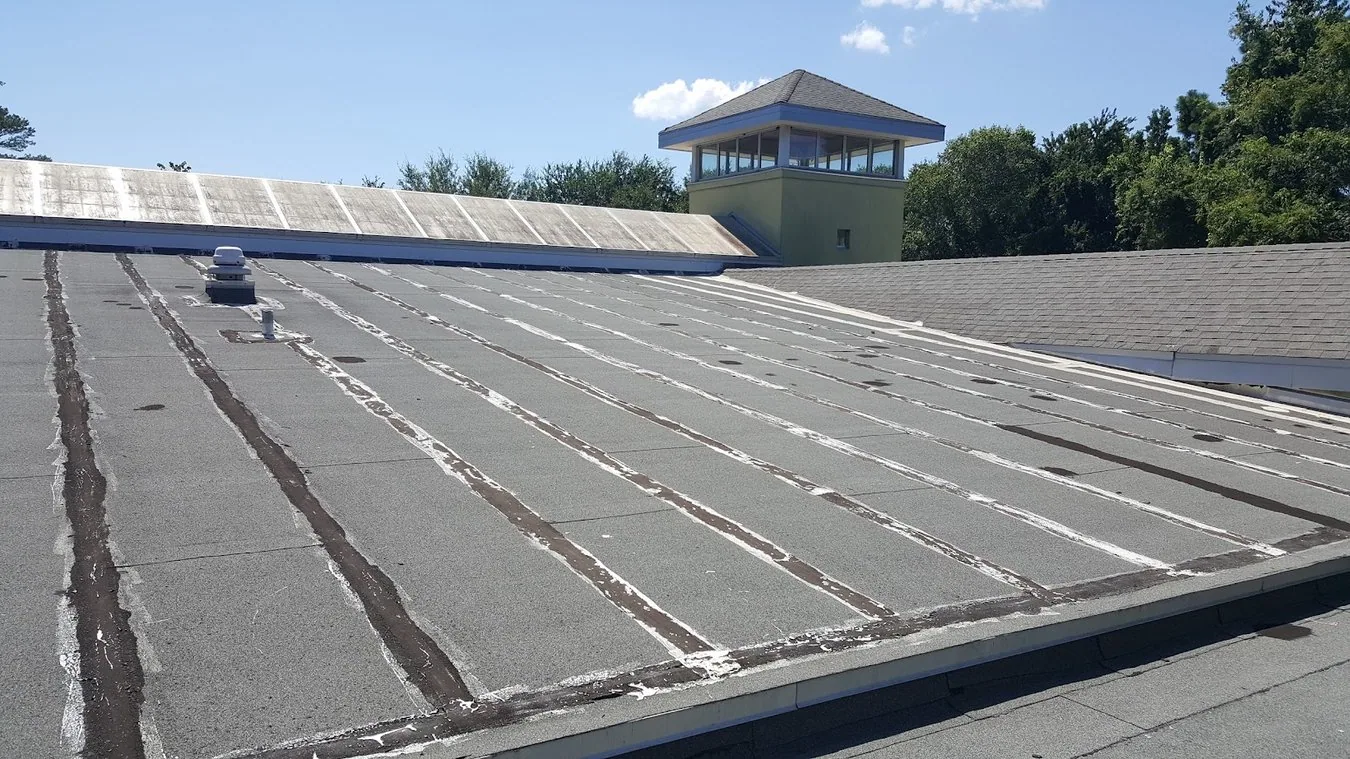
Built-Up Commercial Roofing in Rancho Cucamonga, CA
A commercial owner looking at a built-up roof sees the gravel or coating on top, but the repair decision often depends on the layers underneath. An old patch around a drain may be visible without showing the condition of the plies or insulation below. Before approving another treatment, ask which layers the proposal deals with and what evidence supports it.
Our Rancho Cucamonga built-up roofing review makes that clear. We inspect what we can see, check any records, recommend testing where needed and explain the right repair. You get a practical account of what's worth keeping, what needs rebuilding and what has to be answered before pricing bigger work.
Modified bitumen roofing uses fewer, thicker sheets and different installation methods than built-up plies. EPDM roofing is a single rubber membrane with taped or glued seams. Ask which repairs and flashing details each price includes; the top surface can't tell you what's built underneath.
Find out how the roof is built
A built-up roof is several layers of reinforcing felt or fiberglass ply set in asphalt or coal tar, usually topped with gravel, a cap sheet or a coating. Materials and installation methods vary from roof to roof. We identify what's there and any past repairs before choosing a fix. The surface alone doesn't tell you what's below it.
If records don't answer an important question, a core sample can. We pick spots with a clear purpose and patch each opening properly. Each core tells you about its own area, and more cores may be needed depending on the roof layout. We record the layer sequence so you know what a new proposal will keep, instead of relying on a vague description of an old tar and gravel roof.
Look closely at the surface
Gravel, cap sheet or coating protects the plies from sun and weather. Bare spots, gravel that has blown or washed away, and old coatings all need checking. Surface wear doesn't prove every ply below is finished. And a tidy-looking roof doesn't settle a doubtful flashing at a drain or wall.
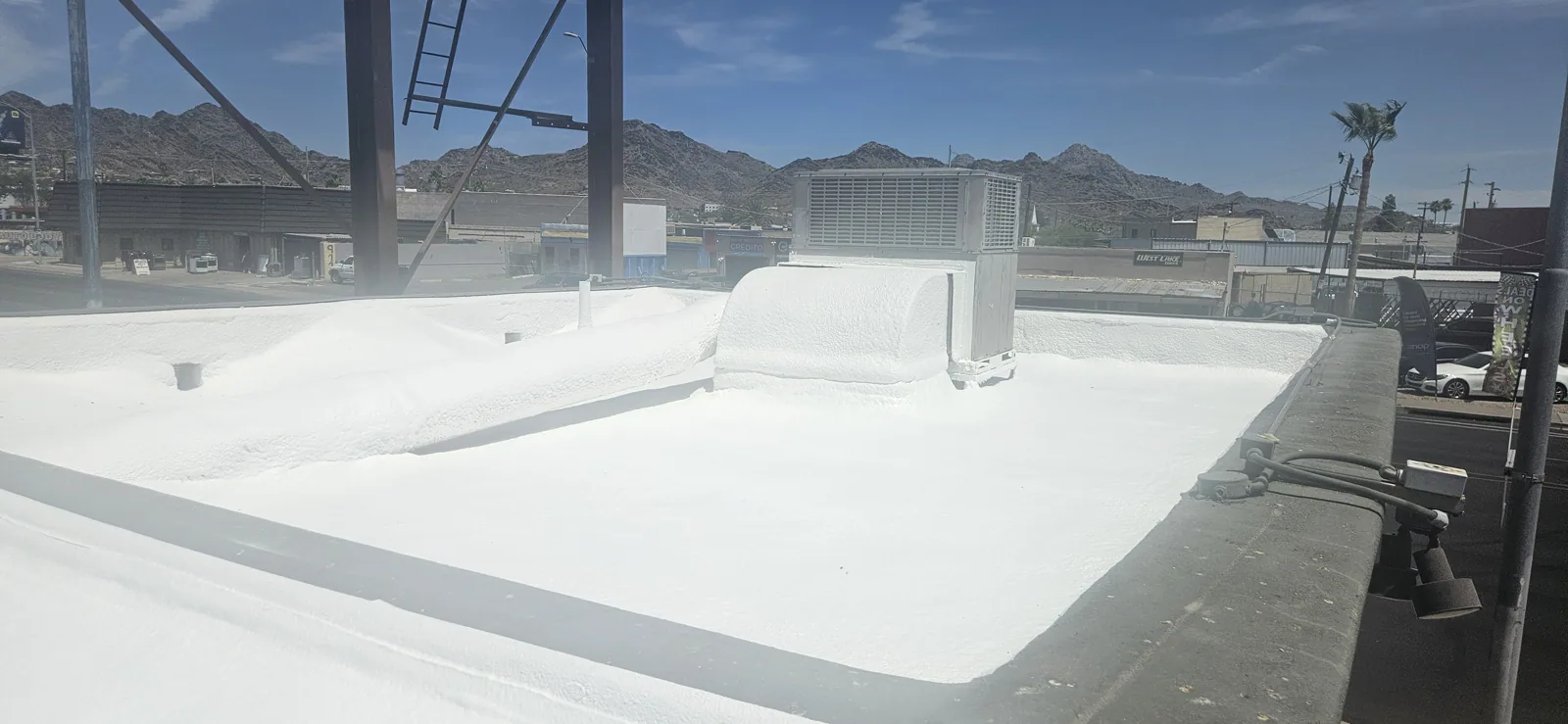
A compatible coating may make sense if the roof and the product support it. Our coating review spells out the prep and repairs needed before application. A coating shouldn't hide an unresolved problem. We explain what it's meant to do and what has to be fixed first, so you can compare it fairly with repair or reroofing.
Gravel or coating can hide the membrane and slow an inspection. We agree up front whether small test areas will be opened, how removed gravel will be handled, and who can approve a larger investigation if layers turn out to be wet or loose. That makes the condition report more useful without treating a small look as proof of how the whole roof is built.
Repair the spot that matters
Built-up roof repairs need methods that suit the existing materials and their condition. An open seam, failed flashing or blister can each need a different fix. We check what surrounds the visible problem and mark anything that needs to come out. The proposal explains how the repair ties back into sound material, not just how much patching goes over the spot.
Our commercial roof repair notes record the location, prep and method. If water is actively dripping inside, we trace the leak separately. Water can travel through the insulation before it shows up. The stain inside is a clue, but the repair goes where the inspection points, not automatically straight above the stain.
Check the insulation and deck
Wet insulation or a damaged deck needs proper testing when it affects the project. Cores and moisture meters each have limits, and we note them in the report. Infrared surveys need the right conditions and follow-up cores to confirm what they show. One test spot can't prove the whole roof is wet or dry.
Where testing shows damage, our insulation and cover board work defines which layers get replaced. A roof recover requires that the existing roof be sound and that code limits on the number of roof layers allow it. A commercial roof replacement explains tear-off and deck inspection. Both comparisons include the supporting work so you can see what each one fixes.
Pick a method that works on site
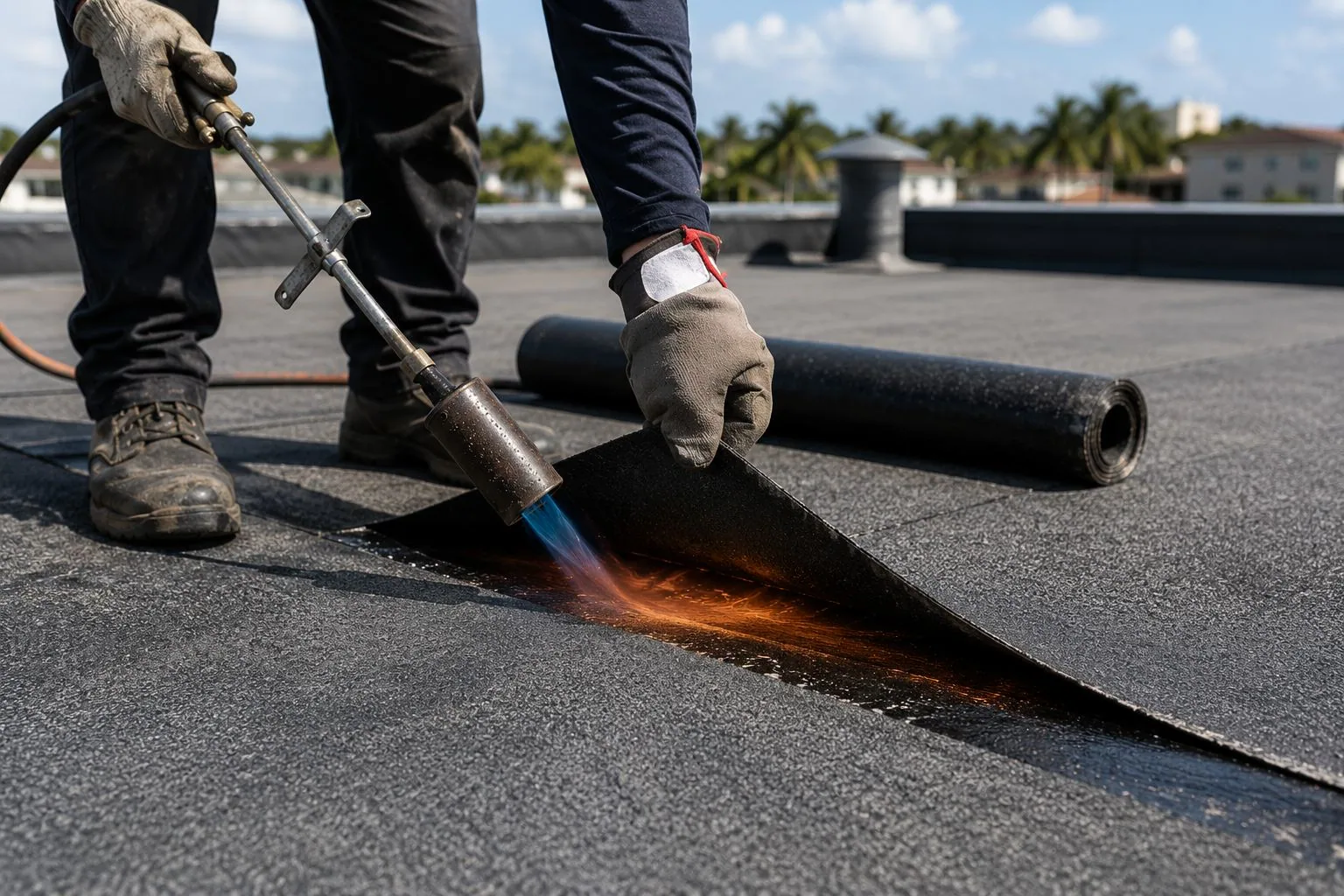
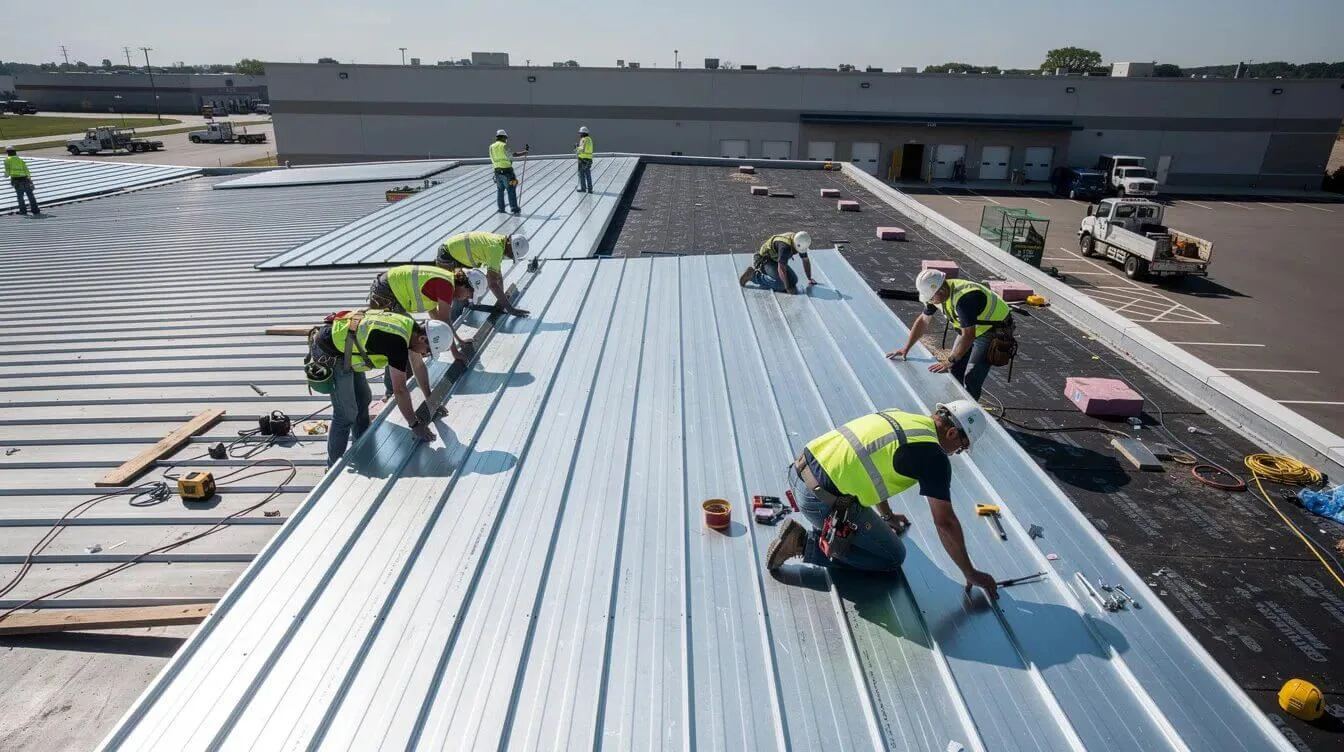
Each material sets its own prep and application rules. Hot asphalt or torch-applied methods bring fumes, fire-watch and coordination needs that belong in the project plan. We review the actual method and the building before pricing. The crew must be qualified, any permits in place, and special monitoring requirements identified.
On an industrial property around Milliken Avenue, we coordinate the method with the equipment and work below, including air intakes that could draw in fumes. In Cucamonga near Foothill Boulevard, tenant access and deliveries can shape the order of work. Any restrictions are explained. A familiar roof type doesn't mean every application method suits every occupied building.
Check drains and edges together
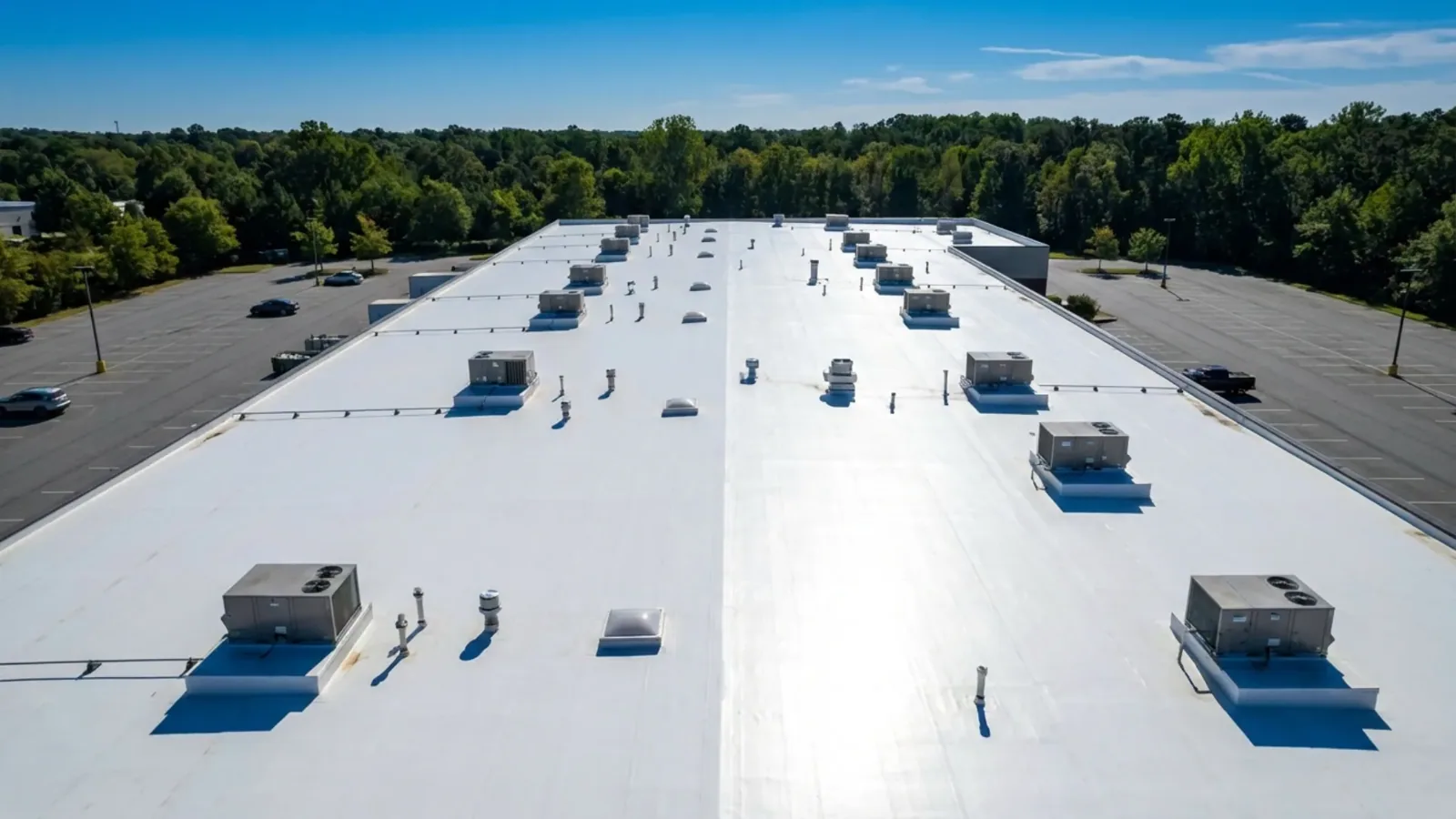
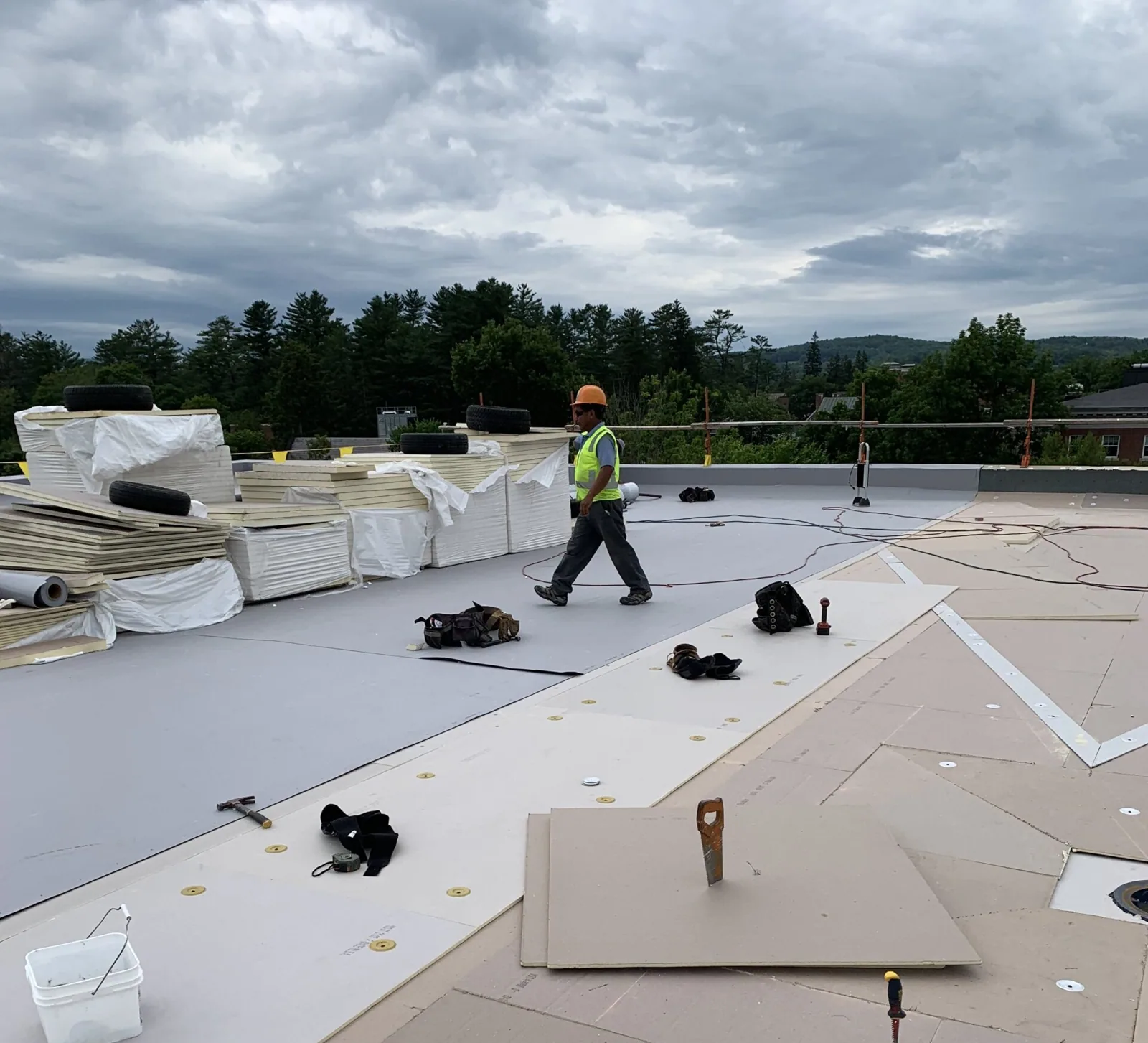
New layers and rebuilt sections have to fit drains, curbs and walls. We measure those heights before choosing the new roof. Drainage problems may need a look at slope or plumbing beyond the roof flashing. Adding new layers doesn't by itself make water drain better.
At a property in Upland, we confirm site access and staging before planning drain or edge work. Our roof drain and scupper work separates roof tasks from plumbing or other trades. Where the scope changes roof height, we show the flashing changes it causes, so you compare a complete proposal instead of unclear add-ons for details a reroof was always going to affect.
Keep a record of what was built
We keep photos of prep and repairs before the new surface covers them. The record lists installed products, finished areas and inspection checks. The manufacturer's and contractor's actual warranty documents set coverage and maintenance terms. Those records go in the roof file instead of a general guess about how long the roof will last.
Later equipment work, coatings and repairs should be added to the same record. Future inspections can then compare what they find with the known roof and past repairs. If a problem comes back, you can ask whether the source or method needs a closer look instead of paying for another unexplained layer. That history helps aim the next repair budget at work the evidence supports.
Commercial Roofing Questions
Can you tell how many plies are left by looking at the surface?
Not reliably. Records and a core sample can show the layers. We tell you what's known and what needs checking before choosing prep or tear-off quantities.
Is coating always a good option for a built-up roof?
Not always. The existing roof and the product both need to fit, and repairs and prep may be needed first. We explain what the coating is meant to do and why the roof is a good base for it.
Does local damage mean the whole roof has to come off?
Not necessarily. A local rebuild may work if the surrounding roof is sound. If the extent is uncertain, more testing comes before a whole-roof tear-off.
What affects built-up roof work on an occupied building?
The application method, access, equipment and what's happening below. Hot asphalt or torches add fume and fire-watch needs. We agree on those controls with building staff and note any tasks that depend on another trade, so bids can be compared on the full job, not just material price.
What should go in the roof file?
Layer information, repair locations, prep photos and warranty documents. Add later changes there too, so the next inspection knows what's under the surface.
Understand the built-up roof scope
Book a roof walk to check the layers and details. We'll explain the repairs worth doing, any testing still needed and the options worth comparing.