PVC Commercial Roofing in Rancho Cucamonga, CA
A retail kitchen with rooftop exhaust needs a roof material chosen for the actual exposure around that equipment. Naming PVC can begin the discussion, but it does not finish it. Product formulations and requirements differ. The owner needs to know what is expected to reach the roof and which material and detail are suitable for that condition.
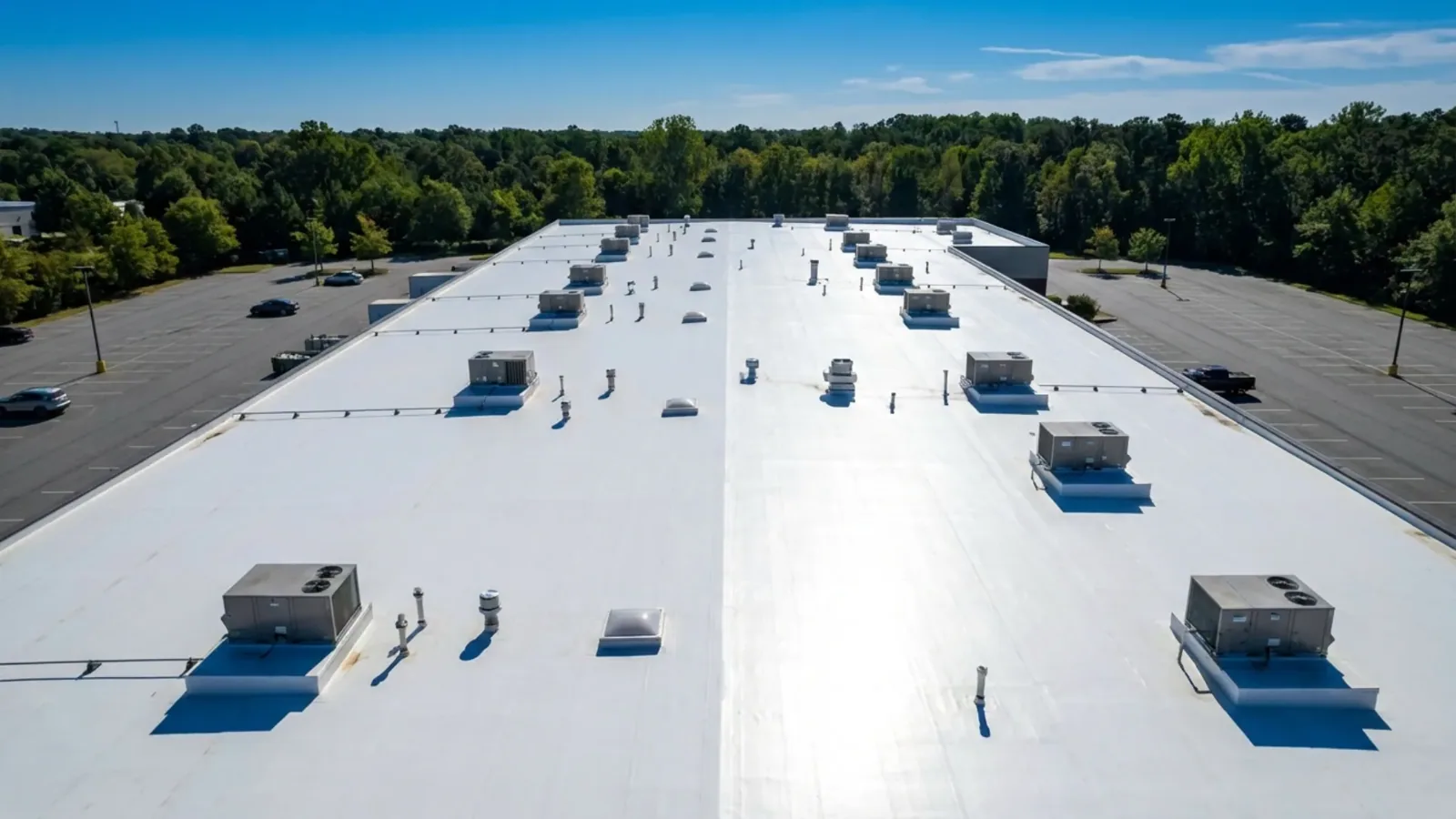
Our Rancho Cucamonga PVC roofing scope starts with the building's assembly and use. We examine accessible findings, review the proposed product and identify supporting repairs or investigation. The recommendation explains the complete work, including welded interfaces, drainage and equipment coordination, so the owner can compare a suitable option with other proposals.
For KEE-identified membrane alternatives, review the particular material information against the same exposure. A TPO alternative also needs its own selection basis. Ask what supports the proposed product and which correction it requires, without turning a shared membrane description into a blanket chemical-resistance conclusion.
Identify the exposure
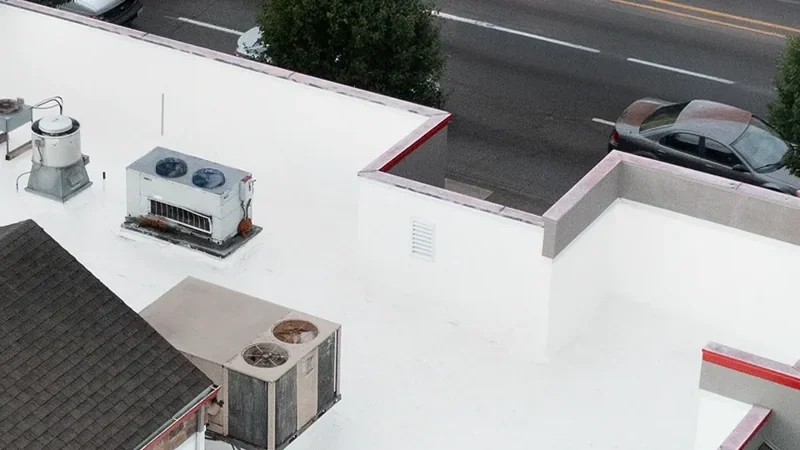
Ask the operator and equipment personnel what reaches the roof near exhaust or service areas. Oils, chemicals and cleaning practices need product-specific review where relevant. Do not assume that every PVC sheet tolerates every substance because the membrane family is often considered for particular exposures. Obtain the selected manufacturer's guidance for the actual product and conditions.
At a property near Downtown Rancho Cucamonga, coordinate those questions with the actual tenant and equipment service team. Suitable collection or equipment measures may belong with another trade. A roof proposal should identify that interface rather than price a membrane while leaving the continuing source of contamination outside the planning discussion. Keep the equipment contact and the relevant product guidance together in the project record. If the tenant changes its equipment or cleaning practice later, that information provides a starting point for checking the new exposure. A local concern should also be mapped accurately, so the selected treatment is tied to the affected area rather than an assumption about the entire building. The owner can then discuss containment, cleaning and repair responsibilities with a clear account of the observed condition.
Read the existing roof
Existing membrane condition, earlier repairs and coatings affect the repair choice. Identify the material and examine accessible seams and flashings. An apparently small concern may need investigation of its supporting connection, while a wider proposal needs a reason grounded in the findings. The membrane's age is useful history but does not itself establish that replacement is necessary.
Our defined roof repairs address suitable local findings. Where the proposed product cannot be joined to the existing material as intended, another method or scope may be needed. Explain that limit and the next option. The owner should be able to see why the correction fits this roof, rather than hearing that a patch is always possible on a thermoplastic sheet.
Check the layers and attachment
The complete assembly includes supporting board, insulation and attachment to a suitable base. Review those components before selecting a new sheet. Concealed condition questions may require authorized samples or other suitable investigation, with limits stated. A sample does not approve every remaining layer across a large roof.
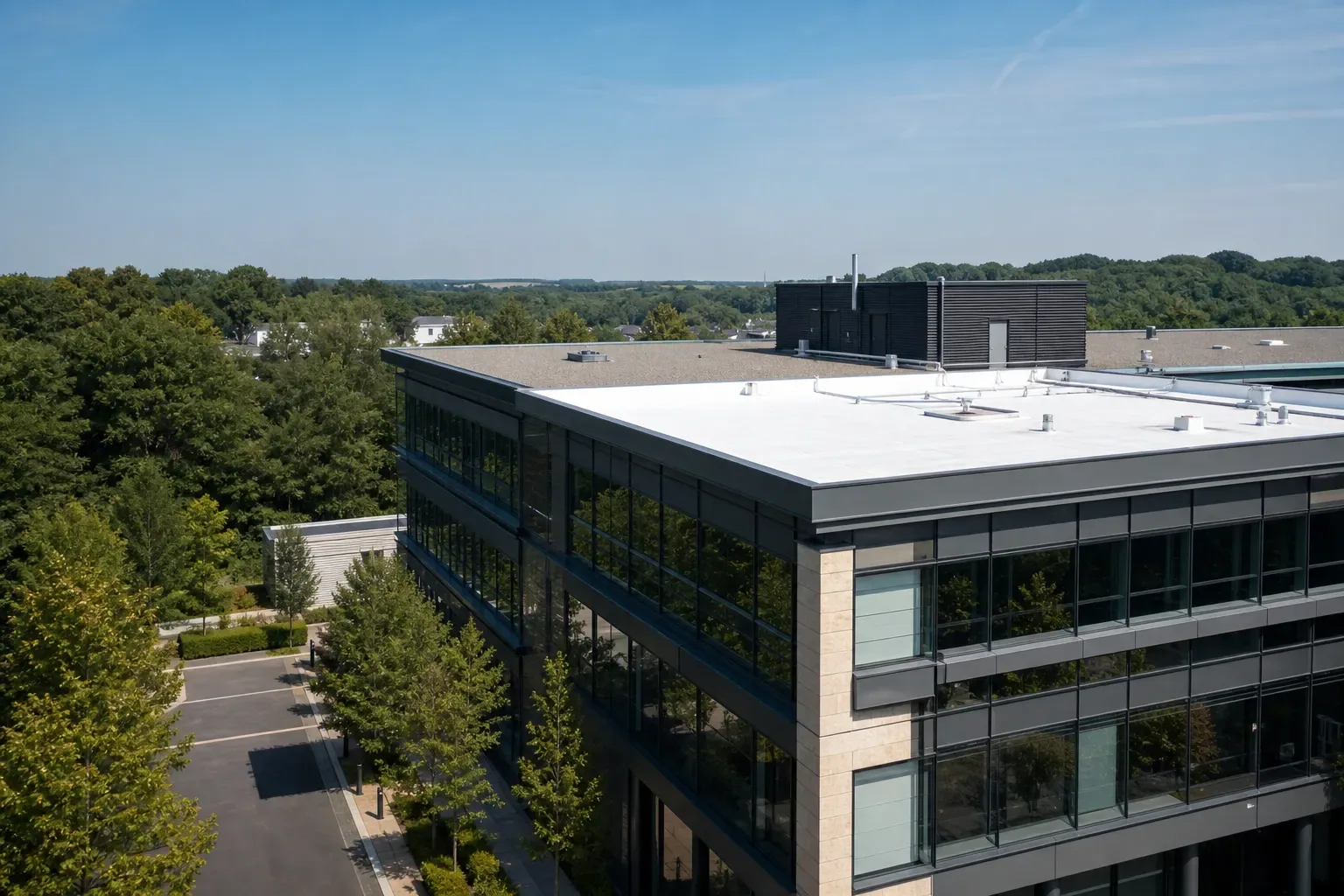
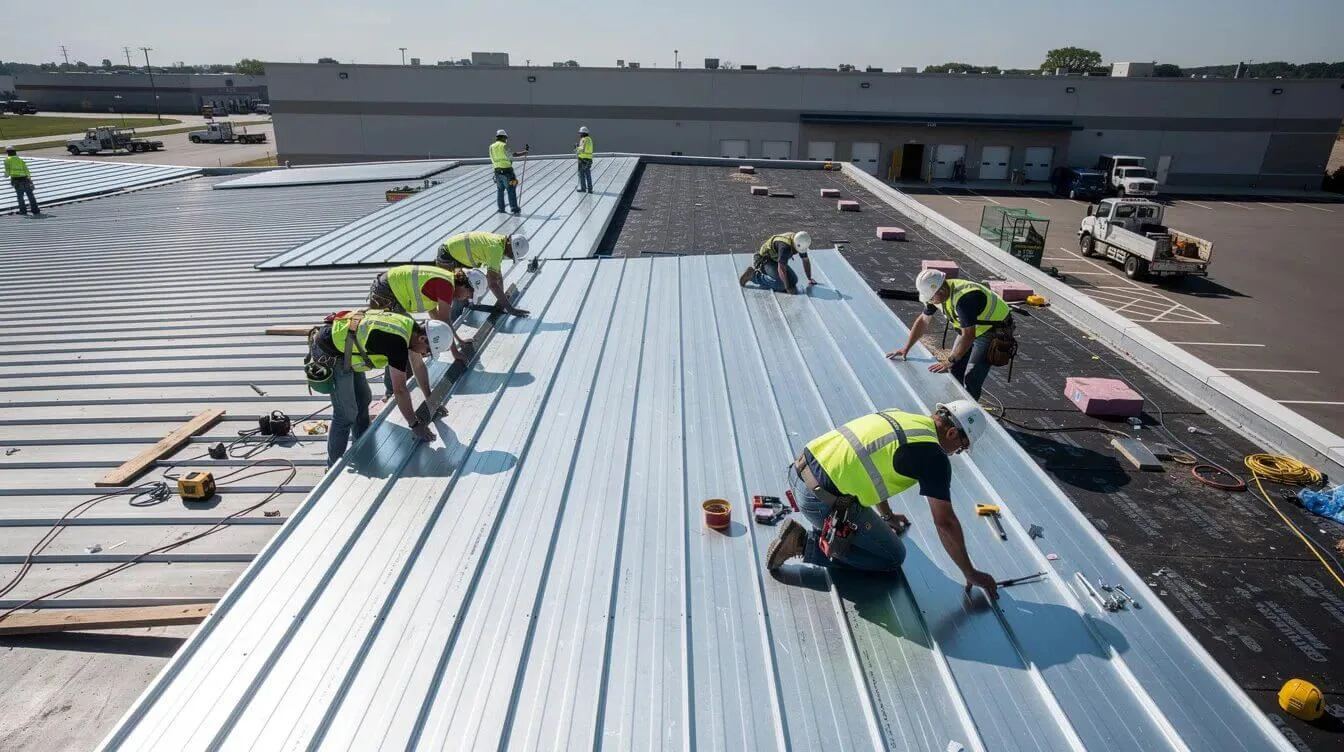
A PVC recover scope needs evidence that the existing conditions and applicable requirements support covering. Replacement needs a defined removal and rebuilding plan. Our supporting-layer service can describe necessary corrections. Include the attachment and relevant design basis so two proposals using PVC do not conceal substantially different assemblies beneath the membrane.
Give welded details a method
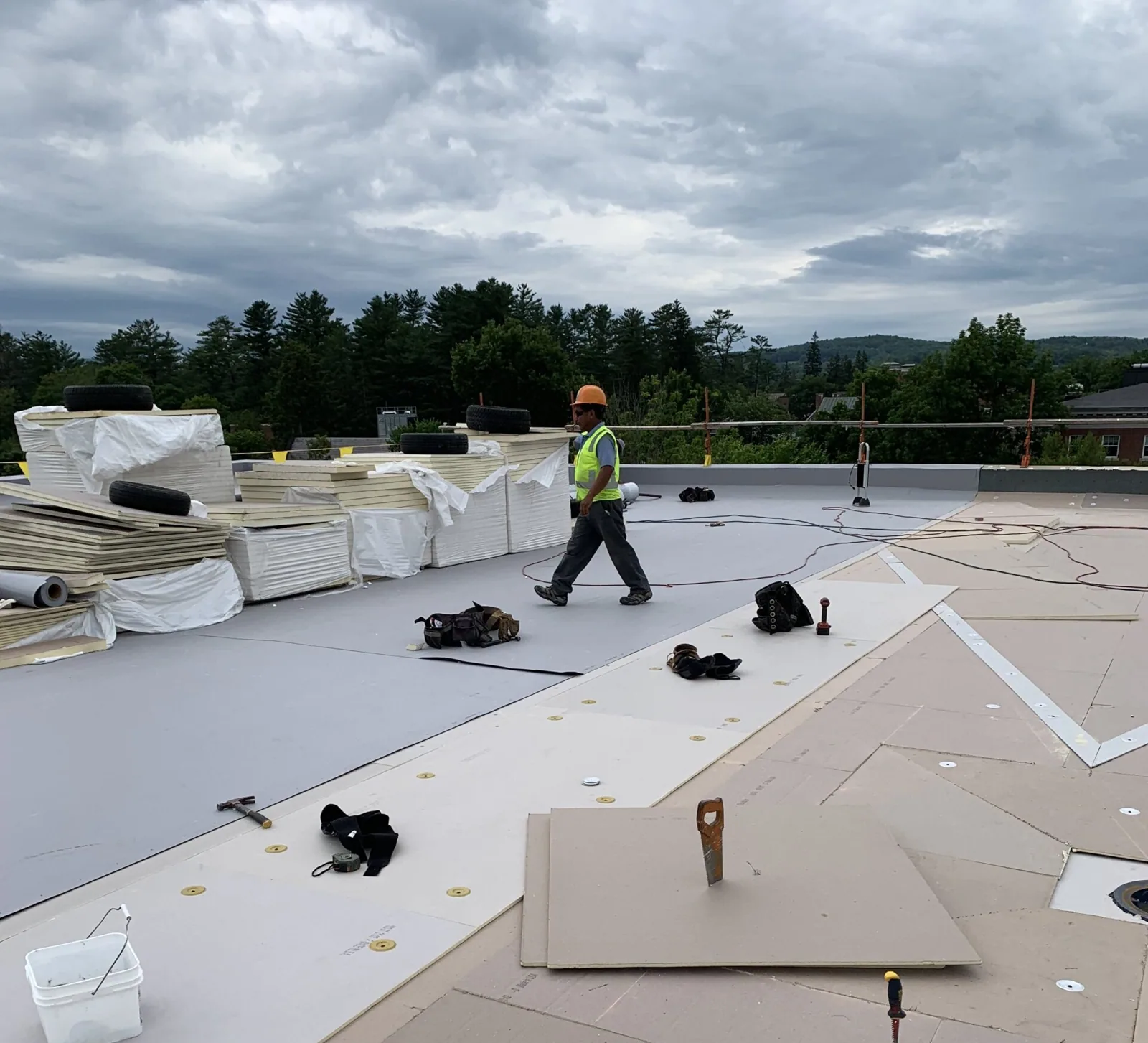
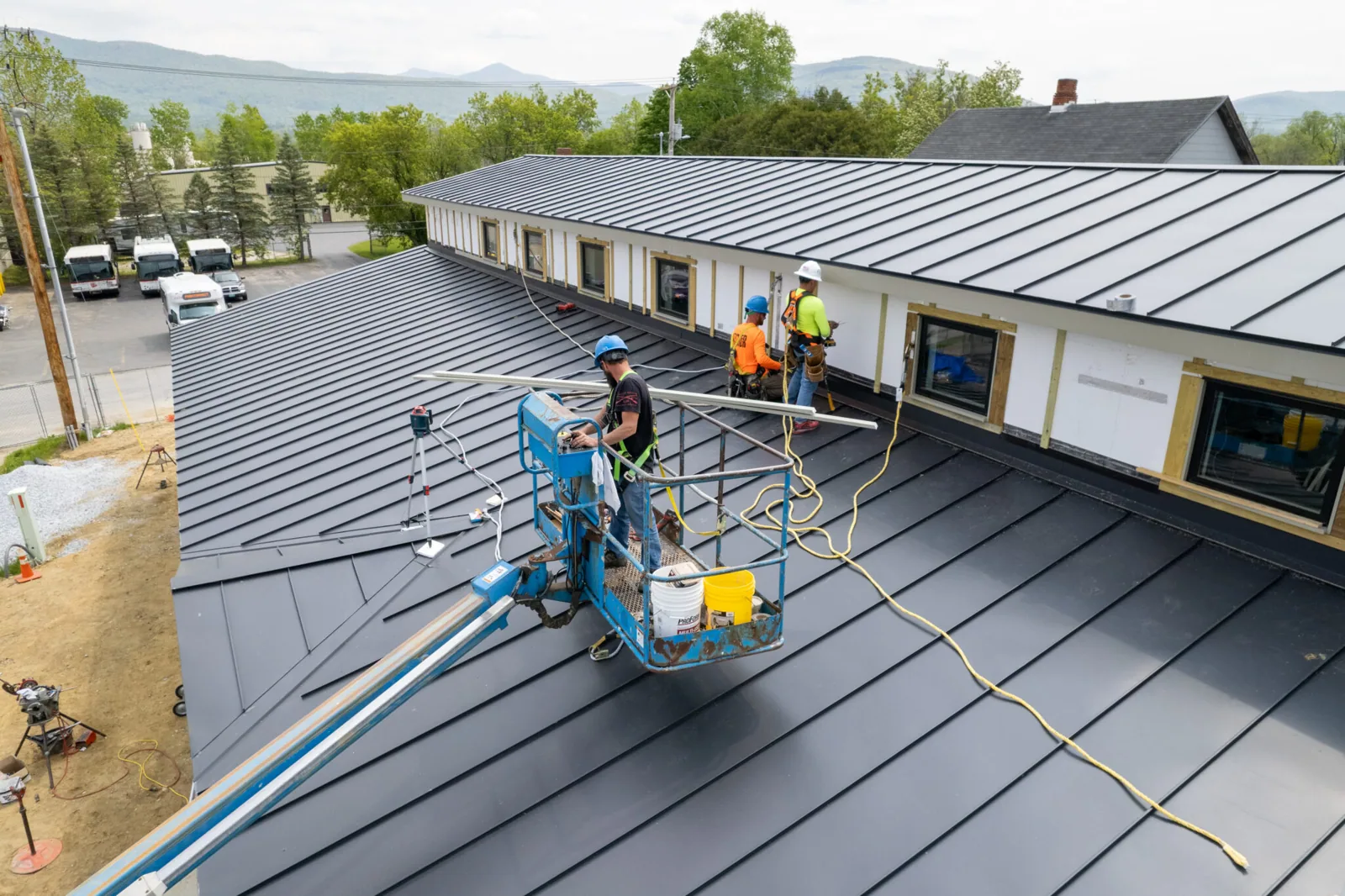
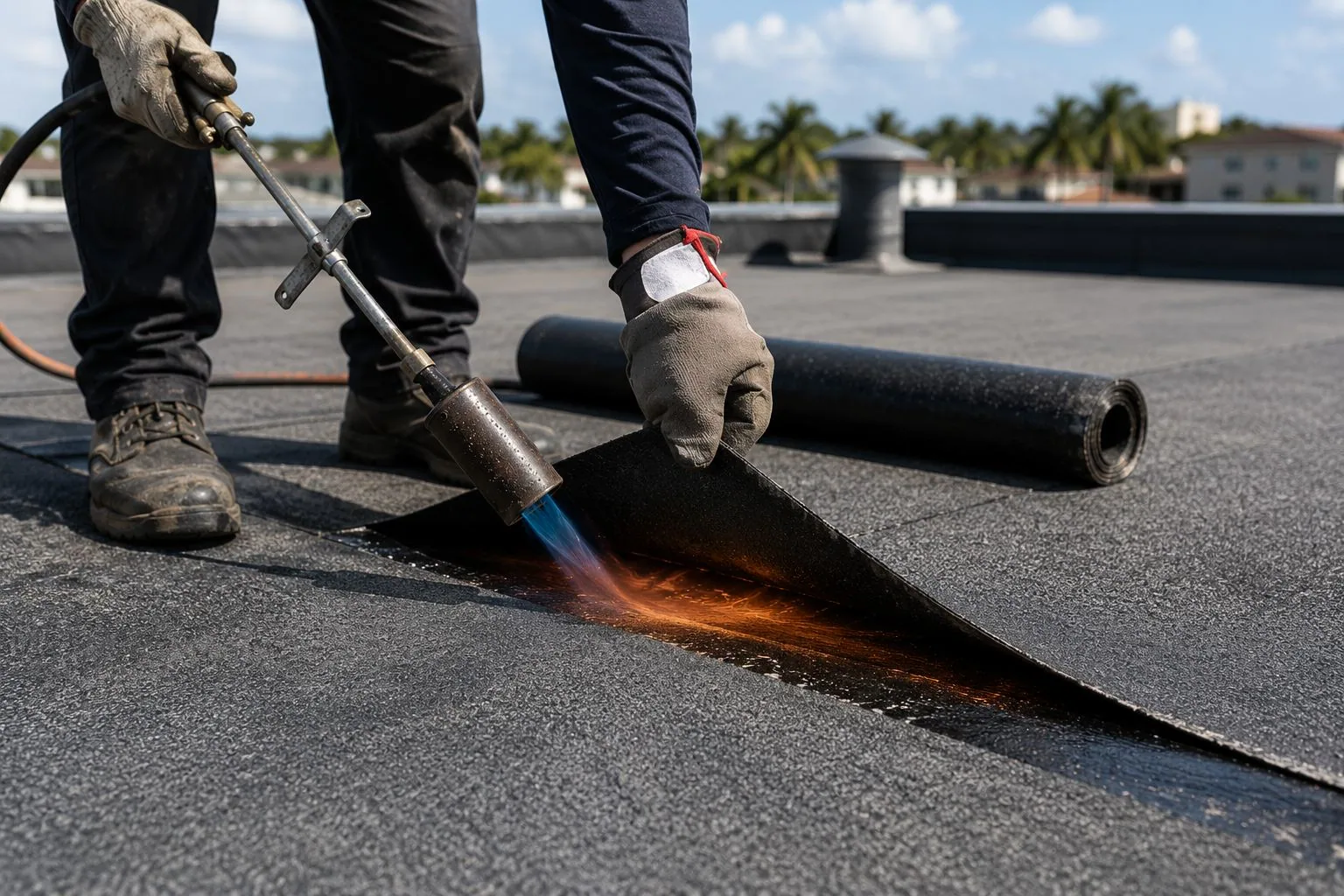
PVC seams and many details use heat-welded connections under the selected system's instructions. Material preparation, equipment setup and conditions matter to that work. Trial and completion checks follow the appropriate procedures. A straight-looking seam does not replace checking the connection, and a weathered surface may need more assessment before repair.
At curbs and walls, the detail must fit the geometry and supporting construction. Our penetration flashing work defines those interfaces with the relevant trades. Added thickness can change flashing height and outlet relationships. Measure those conditions before installing the new assembly, so a field membrane is not completed while its surrounding details remain unresolved.
Record the welder setup and the installer’s visual checks for the conditions present, including any test seams required by the project plan. A sound seam depends on clean, prepared surfaces and controlled work; appearance alone does not prove the entire assembly is watertight. Note repairs and retests on the roof plan so the owner can distinguish original work from later service.
Keep drainage in the decision
Observed collection and outlet concerns need examination alongside the material proposal. A membrane choice does not change roof slope or restore a concealed pipe. Review drains, scuppers and the discharge route. Where a geometry correction is proposed, use measurements and an appropriate plan that accounts for curbs and adjacent transitions.
Our drainage review separates accessible roof work from plumbing or design questions. At an industrial property in Etiwanda, identify roof access and equipment service with the operator before the examination. The useful result is an understandable route and correction scope, including the tasks that must be resolved before new PVC is installed.
Review the surface requirements
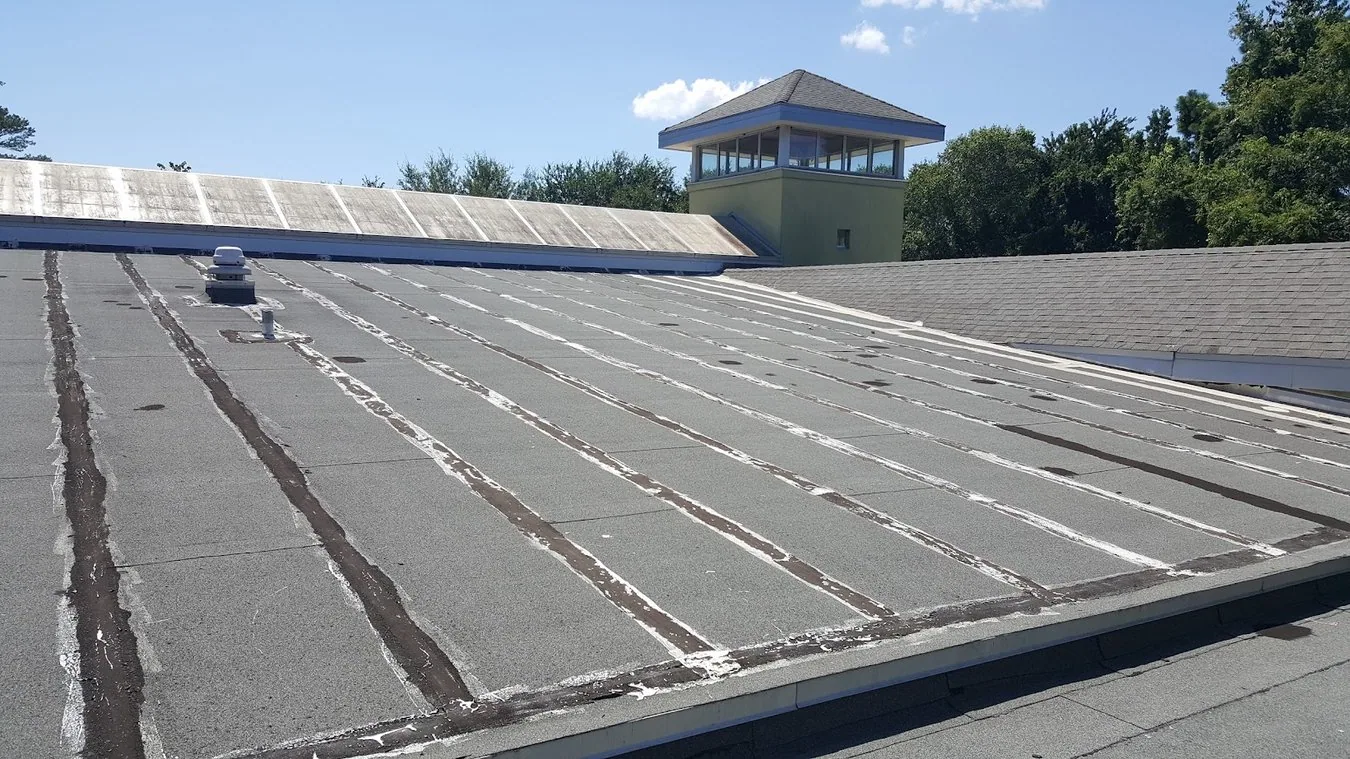
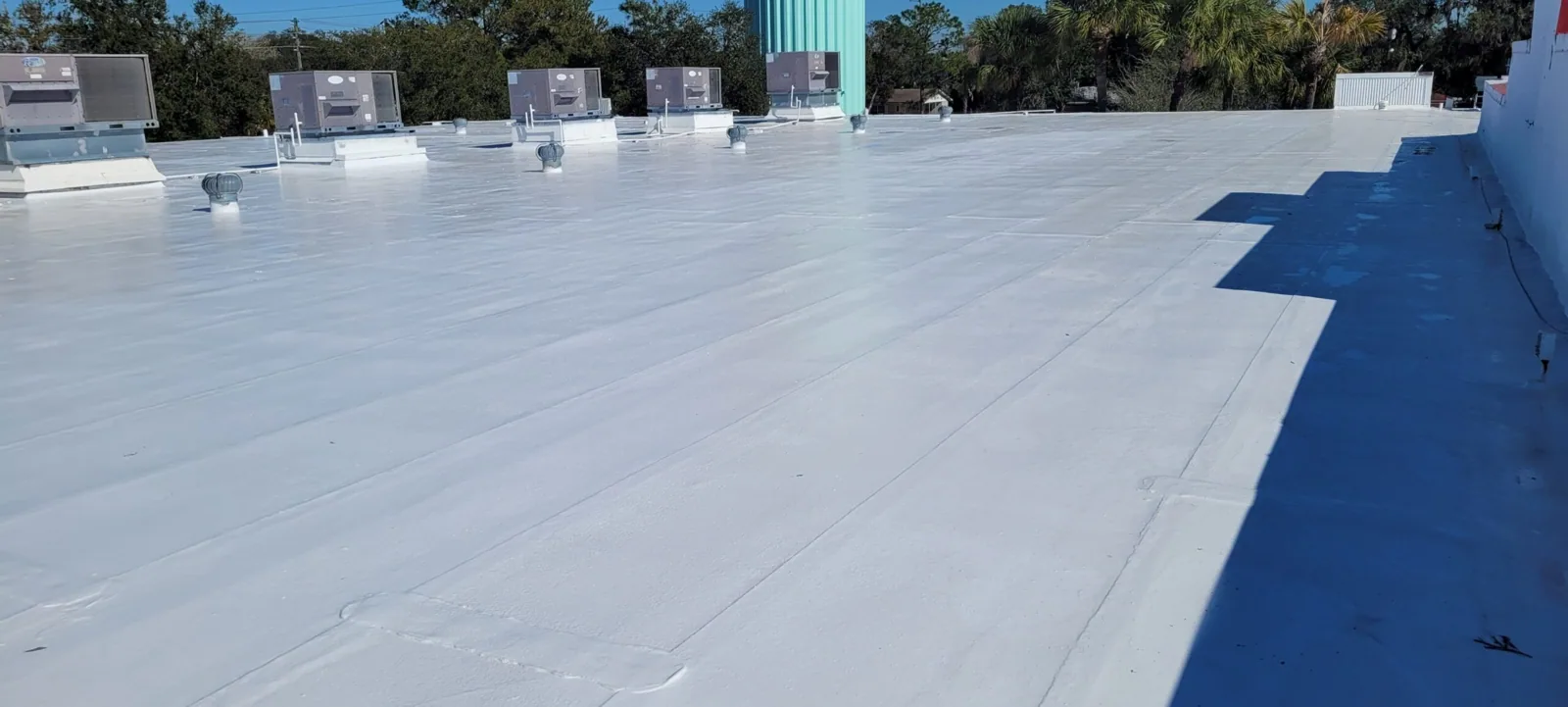
The selected PVC product may provide reflective properties relevant to an applicable project. California energy requirements need review for the building and actual work, including the appropriate approaches or exceptions. Insulation and other provisions may also apply. The product name and surface color do not by themselves establish that the complete project requirements have been met.
Our reflective roof planning connects the material with the actual scope. Keep ratings and required documentation with the proposed assembly, and review substitutions against the same basis. That lets the owner compare what each option accomplishes without relying on an assumed energy saving or treating a bright finish as a correction for hidden assembly damage.
Plan use after installation
Service paths, equipment work and material handling can affect the roof after installation. Identify suitable protection where the assembly requires it and coordinate later trade activity. Actual manufacturer and workmanship documents define coverage and upkeep obligations. Retain those documents with the installed product and completed detail record.
A maintenance program can examine accessible changes, outlets and areas near equipment. Product-specific cleaning instructions matter where contamination is present. Record the finding and agreed task rather than assigning a generic cleaning treatment. The owner then has both an identified roof assembly and a practical record of the conditions influencing its next repair decision.
Commercial Roofing Questions
Is every PVC product suitable near grease?
The actual product and exposure require review. Manufacturer guidance and the equipment arrangement help establish suitability. Avoid extending a membrane-family reputation into a promise about every formula or chemical condition.
Can an aged PVC roof be patched?
Examine the existing material and proposed joining method before deciding. Preparation and connection suitability matter. A defined repair may be practical, while another condition can require a different scope or additional investigation.
What makes two PVC bids different?
Supporting layers, attachment, preparation, details and design tasks may differ even when both name PVC. Compare those items and the operating plan. The owner should see what remains and what is rebuilt under each price.
Does PVC remove drainage concerns?
Drainage remains a separate assembly question. Outlets, geometry and discharge routes need examination where concerns appear. The proposal should include necessary corrections rather than assume a different membrane material changes the water route.
What records help future repairs?
Retain the selected product, assembly information, completed locations and relevant checks. Add equipment and exposure changes to the file. Those details let a later repair use the correct requirements instead of relying on an unspecified PVC label.
Choose PVC for the actual roof
Arrange a roof walk to review condition, exposure and assembly needs. We will explain a suitable scope, product questions and the work worth considering before you commit to the material.