
Membrane Puncture Repair in Rancho Cucamonga
Not every scuff on a warehouse roof needs a patch. A confirmed hole with sound membrane around it gets a clean, defined repair. A surface mark gets checked first. We record what we actually find instead of treating every blemish as the same problem.
You also need to know what happens to the patch afterward. If HVAC techs keep crossing that area or material gets dragged over it, the repair can get damaged again. We ask about rooftop traffic and include walkway pads or other protection with the repair.
The written scope lists the hole, the prep and anything underneath that still needs checking. Work you can approve now is kept separate from unknowns, so you get a clear task instead of a vague claim that the whole roof is fixed.
We confirm the hole and mark where it is
Each reported spot gets a dated photo and a location on the roof plan. We note nearby units, debris and old patches. That helps find the problem, but it doesn't prove who caused the damage or when.
A commercial roof inspection separates what we could reach from areas that were hidden or unsafe. A mark on the surface doesn't prove the membrane is punctured, so we pick a test that fits the material.
We identify the membrane and its repair requirements. Two white membranes can be different products that don't weld or bond together, and old coatings or dirt can change how the patch has to be prepped.
Many of these jobs are on industrial buildings around Milliken Avenue and Etiwanda. The building and its operator decide access, material handling and what's going on below. Location alone doesn't tell us what punctured the roof.
We keep what someone told us separate from what we found. A tech's note helps us look, but it doesn't assign blame.
Map the puncture against equipment service paths, rooftop storage and recent contractor activity, while treating those as context rather than proof of cause. Note whether the membrane is cut, abraded or compressed and whether the supporting layer appears stable at the accessible opening. Keep loose material for identification when useful and photograph the mark with a nearby roof reference. If the source of interior water remains uncertain, compare this location with other potential entry details before assigning a permanent repair.
The patch needs sound membrane around it
We check the membrane around the hole before sizing the patch. Brittle material or a bad old repair means more prep. The patch has to reach far enough to bond to good membrane, not just cover the visible hole.
Our commercial roof leak repair work matches leaks inside to what's on the roof. Water can travel under the membrane, so a puncture deserves fixing but may not explain every leak in the building.
If wet insulation could change the repair, we take a core and agree with the facility how it's protected and closed. A core shows that spot only, not the size of a wider problem.
We say so when that's still unknown, and recommend the test that answers it before pricing hidden damage as a tear-off quantity.
Infrared readings need interpretation and confirmation. They don't by themselves show how far moisture has spread, prove the area is dry or find the entry point.
The repair price includes the prep
The estimate describes the hole and how much material around it the repair needs. Cleaning, removing incompatible old patches and replacing wet insulation can all add work. A small hole can take more prep than its size suggests.
On PVC roofing, we confirm the exact product and its repair method. Grease or chemical exposure from kitchen exhaust or process equipment matters, and a general claim of chemical resistance doesn't cover every residue or old coating.
Seam repair may be a separate item next to the puncture. We mark both, so a field patch doesn't cover up a bad seam left out of the job.
Compare the full repair. A cheaper patch price may leave out prep or access.
Confirmed work and possible extras are priced separately. If tear-out reveals more damage, we bring back the location, size and fix for your approval. Disposal and protection inside are included where needed.
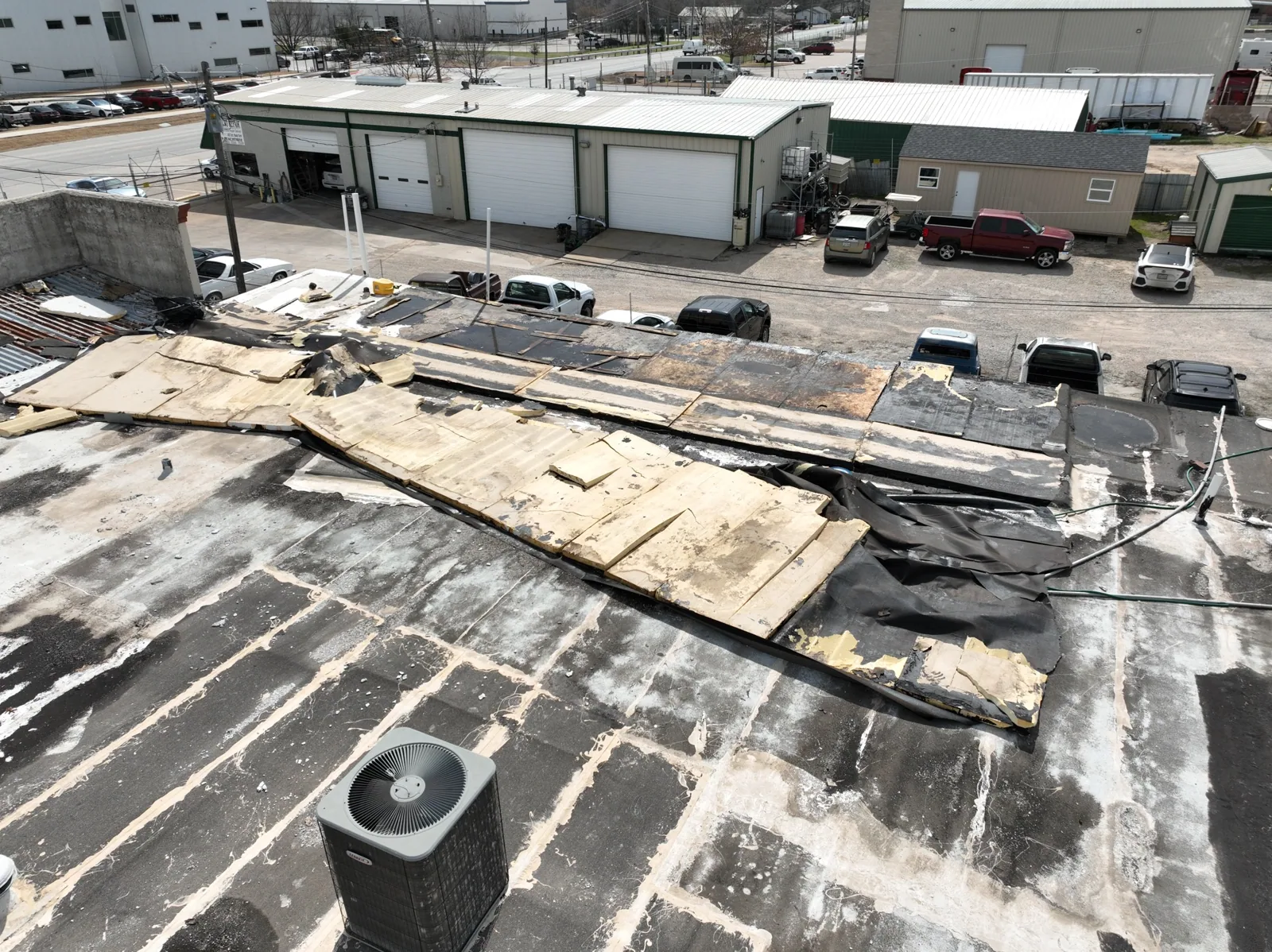
Rooftop traffic is planned around the patch
Our rooftop equipment coordination identifies service work still planned near the repair. Tools, removed panels and parts set on the roof can damage a fresh patch, so we agree on walk routes and protection before that work happens.
Your facility team and the HVAC or electrical contractor handle shutdowns and restarts. Our crew doesn't shut off equipment or block air intakes to reach the repair.
For a store near Victoria Gardens, we confirm the exact building and delivery route. That helps plan around shoppers, but it doesn't give us permission to use a neighbor's space.
Protection depends on the traffic. One owner's different buildings may each need a different approach.
Timing follows the roof surface, the product's limits and the operator's schedule. Even a small hole gets temporary protection if the permanent repair can't be finished, and we name who to call if the plan changes.
Code and product rules still apply
We check the requirements for the address and the work. Rancho Cucamonga lists its codes by plan filing date, including the change on January 1, 2026. The building department and local amendments still need confirming.
If equipment or a support is being changed, a design review may be needed. We can point out the problem; we don't approve structural or mechanical work. The permanent repair follows whatever is approved.
Keep warranty documents handy before later work. Notice, maintenance and alteration rules come from the actual terms. One patch doesn't mean other holes or roof sections are covered.
The repair method fits this roof. A product that worked on another building doesn't replace checking this roof's condition.
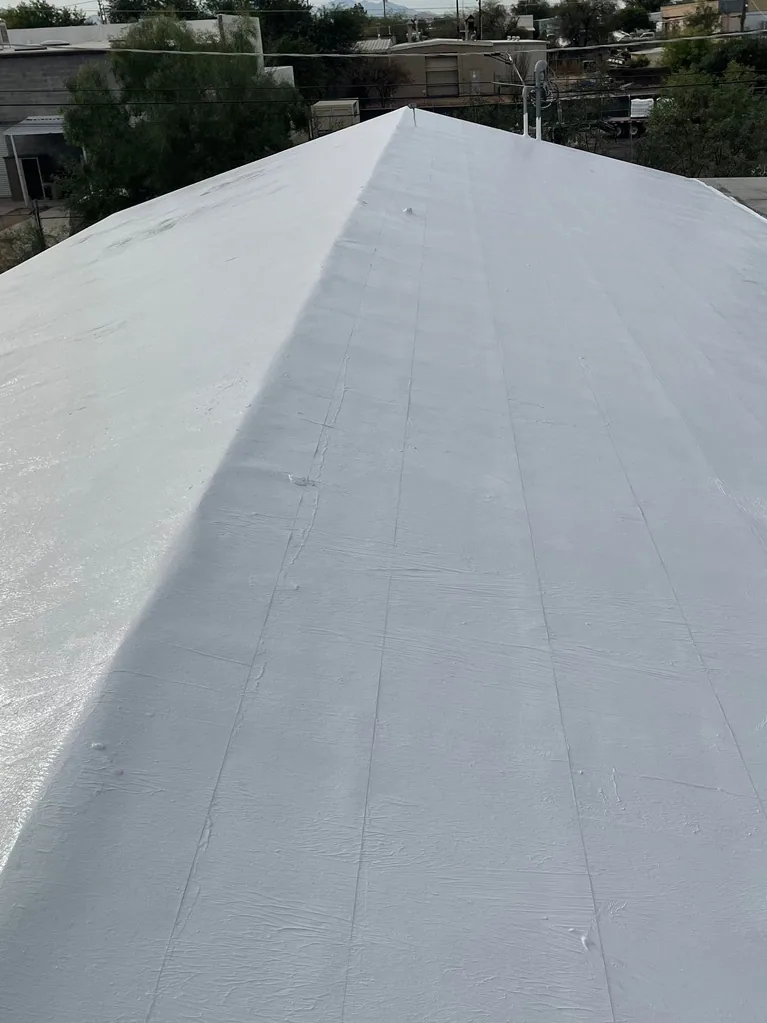
The finished patch has a usable history
We photograph the prepped area and finished patch with nearby landmarks, and keep the materials and approved changes on file. Where probing or other checks are specified, we record how and where. A check at the patch doesn't vouch for the rest of the membrane.
Preventive roof maintenance can cover recurring debris and foot traffic problems, each with a location and someone responsible. Repeat punctures are a reason to look at how service crews use the roof.
Our roof condition report lists areas not inspected and testing still open. For jobs in the Rancho Cucamonga industrial district, we keep the building address and access notes with it.
Later leaks or equipment issues get their own dates. We compare them to the repair and any work since; a leak in the same room doesn't mean the same cause.
Before closing out, we list equipment, interior and maintenance items outside the roofing work, so the next property manager knows what's done and what's still open.
Any later penetration work is tied to its roof location, with the trade and flashing detail agreed before cutting in.
If the patch runs into damaged flashing, we fix that tie-in too. Prep and the material kept in place are documented before it's covered, and any extra work goes through the approval process instead of leaving a half-finished detail.
Commercial Roofing Questions
What decides whether a mark should be patched?
Confirming there's an actual hole or tear and sound membrane around it to patch onto. A surface mark alone doesn't call for a repair.
Can a local opening settle the wider condition?
No. A core or opening shows that one spot. Deciding to tear off or keep a larger area needs more evidence across it.
Why include remaining equipment activity?
HVAC service traffic can damage a new patch. We agree on routes and protection before that work goes ahead.
What makes the completed record useful?
Photos and locations of the prep and finished patch, the materials used and what's still open. Later leaks get their own dates.
Find out what the puncture really needs
Schedule a Rancho Cucamonga roof inspection. We'll confirm the hole, price the full patch and tell you about any hidden damage questions before you approve the cost.