
Roof Capital Planning in Rancho Cucamonga, CA
An owner of a distribution building near Milliken Avenue usually wants to know two things before setting next year's roof budget: what has to be fixed now, and whether a bigger project is coming. Capital planning answers both. We walk the roof, separate the problems you can see from the ones that need more checking, and turn that into repair, restoration or replacement options you can actually price.
On a Rancho Cucamonga, CA building, the membrane is only part of the cost. Crane or hoist access, protecting the space below and work by other trades all add up. We put those items in each option so you can compare real totals and approve the work that makes sense today.
Start With What the Roof Actually Shows
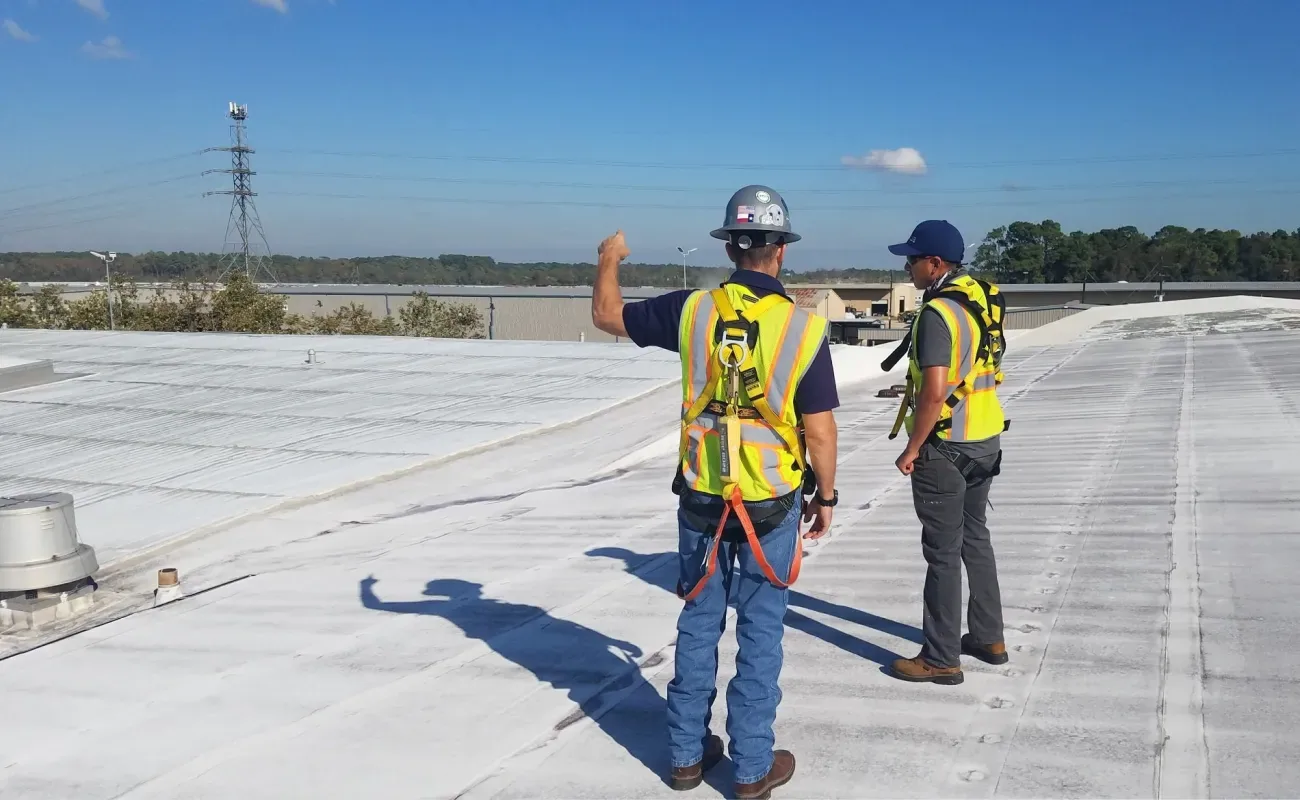
We start by agreeing which roof sections are in the plan and pulling whatever installation and repair records you have. On the walk we photograph the membrane, seams, flashing and drains, and tie every finding to a spot on a roof plan. If a section is locked off or unsafe to reach, the report says so, because a second look there could change the numbers.
A roof condition report is the starting point for every scope we write. At a repair we check the material around the damage and the deck underneath where it matters. Past service invoices tell us where to look, but a history of leaks does not by itself mean the roof needs replacing. The recommendation comes from what we find on the roof now.
When the condition of the insulation could swing the decision, we recommend a small set of core cuts first. Each core tells you about that spot only, so deciding to keep a large area of existing roof takes more than one or two samples. That short investigation is cheap compared with the project it informs, and it keeps you from committing to an option on a guess.
Useful planning separates near-term work from longer-horizon alternatives and shows the evidence behind each quantity. Identify the roof area included, any allowances for concealed construction, and the assumption that would change the recommendation. Costs can then be compared across properties without treating every estimate as equally certain. Refresh the plan after a repair, inspection or equipment change, and preserve prior versions so an owner can see what changed and why. The resulting forecast supports a capital conversation; it does not replace design documents or a current bid.

A Repair Has to Finish the Whole Detail
A targeted repair lists the prep work, the material that matches your roof and the exact detail being fixed. A split membrane next to an HVAC curb may come back if the unit is vibrating or the curb is loose, so we look at both. If a wall or mechanical contractor needs to do part of the work, we say so and price the roofing side alongside it.
Drainage problems get the same treatment. Debris in a drain, a torn drain flashing and a low spot that holds water are three different fixes. Cleaning handles the first. Changing slope or adding a drain needs measurements and sometimes an engineer, and we flag that before calling it a ready-to-build item.
Every repair gets a boundary a crew can find on the roof, with photos and quantities. If removing material uncovers more damage, we stop, show you, and get approval before the work grows.
Coatings Only Work on a Sound Roof
A coating restoration only works on a roof that is still sound underneath. We check the surface for dirt and old coatings, test adhesion where needed, and repair open seams and bad flashing before any coating goes down. The manufacturer's instructions set the prep and application steps.
A coating will not dry out wet insulation or fix a rotted deck. We mark what we know needs replacing and what still needs checking, so the restoration price covers the work it really includes and lines up fairly against repair or replacement.
Weather, cure time and odor control in an occupied building go into the schedule. Your facility team and HVAC contractor decide how to handle air intakes. The window has to cover prep, coating and cure, with the building protected throughout.
Replacement Brings Its Own Detail Work
A roof replacement plan covers tear-off, deck repairs and the new system. Thicker insulation raises the roof surface and can leave curbs, wall flashing and drains too short, so we measure those first. Materials follow the building's needs and the manufacturer's requirements.
A recover over the existing roof only makes sense if the old roof is dry, well attached and the structure can carry another layer. We price it against tear-off using the same findings, with unknowns like hidden wet insulation shown as separate allowances.
Your design team confirms code, permit and California Energy Code requirements for the address and scope. Cool roof rules have their own compliance paths and exceptions. A white membrane is common here, but it does not automatically satisfy every building.
Every Building Sets Its Own Work Limits
Milliken Avenue and Etiwanda are home to much of Rancho Cucamonga's distribution and manufacturing space. On those properties, the operator tells us where we can stage and how to work around truck traffic at the docks, and material and debris move on that plan. The building's advertised square footage is not the roof quantity; we measure the roof itself for the estimate.
A project in Downtown Rancho Cucamonga needs its own plan for customers and tenants. We note which rooms sit under the work and how they will be protected. A building in Ontario has different deliveries and hours again. Each site's limits affect the method and the price.
Rancho Cucamonga summers are hot and dry, and most rain falls in the cooler months. We pick a work window from the forecast, the product's temperature limits and safe access. Design review and material lead times take time too, so a start date only means something once the scope is settled.
Keep the Approval Tied to the Roof
Your building's roof history holds the dated inspection and the work you approved. We add completion photos, the materials used and any change orders, and note work that belongs to other trades. Warranty documents stay with the installation they cover, along with any notice requirements. Next year you can compare new findings with what was actually done.
The budget review also names who can approve extra investigation or a change in quantity, and what they need to see. If the price changes, you can trace it to a specific new finding and the work it adds.
Compare options at the same level of detail. A bid that leaves out edge metal or material hoisting looks cheaper but does not buy the same finished roof. Ask what is not in the price and who is supplying it. If another contractor owns part of the work, keep their scope and timing with the roof decision. Then you know what the whole project needs before you decide what to fund.
Commercial Roofing Questions
What makes a repair allowance useful to compare with replacement?
Both options should be based on the same inspection and the same building limits, and both should include prep, deck repairs and finished details. If more testing could change one of them, that test should be listed before you weigh the bigger expense.
When should hidden-layer investigation be approved first?
Approve it first when the condition of the insulation or deck could change which option works or what it costs. A few core cuts answer that question cheaply, though each one only describes its own spot.
Does a reflective membrane settle the code decision?
No. The building and scope of work decide what is required, and the California Energy Code has several compliance paths and some exceptions. Confirm them with your design team before choosing the membrane.
What can change the practical construction window?
Rain, heat and the product's application limits all matter. So do work by other trades, delivery and staging, and how much disruption the tenants can take. Sort those out alongside the roof scope before locking in material order dates.
Get the Complete Roof Choices Before Setting the Budget
Schedule a roof inspection and get repair, restoration and replacement options priced side by side, with the access and building limits included and any further testing spelled out.