
Infrared Roof Moisture Survey in Rancho Cucamonga, CA
A warehouse owner facing a recover proposal needs more than colored rectangles on a roof photograph. The useful question is what those rectangles represent, how the finding was checked, and which parts of the roof still need investigation. An infrared moisture survey can help organize that work. It measures surface temperature differences; it does not see water through the membrane.
For a commercial building in Rancho Cucamonga, we start with the assembly, the weather and the spending decision. Then we explain whether thermal screening is suitable, what confirmation is needed and what the resulting evidence can support. That is a better foundation for a fair number than treating every warm patch as wet insulation.
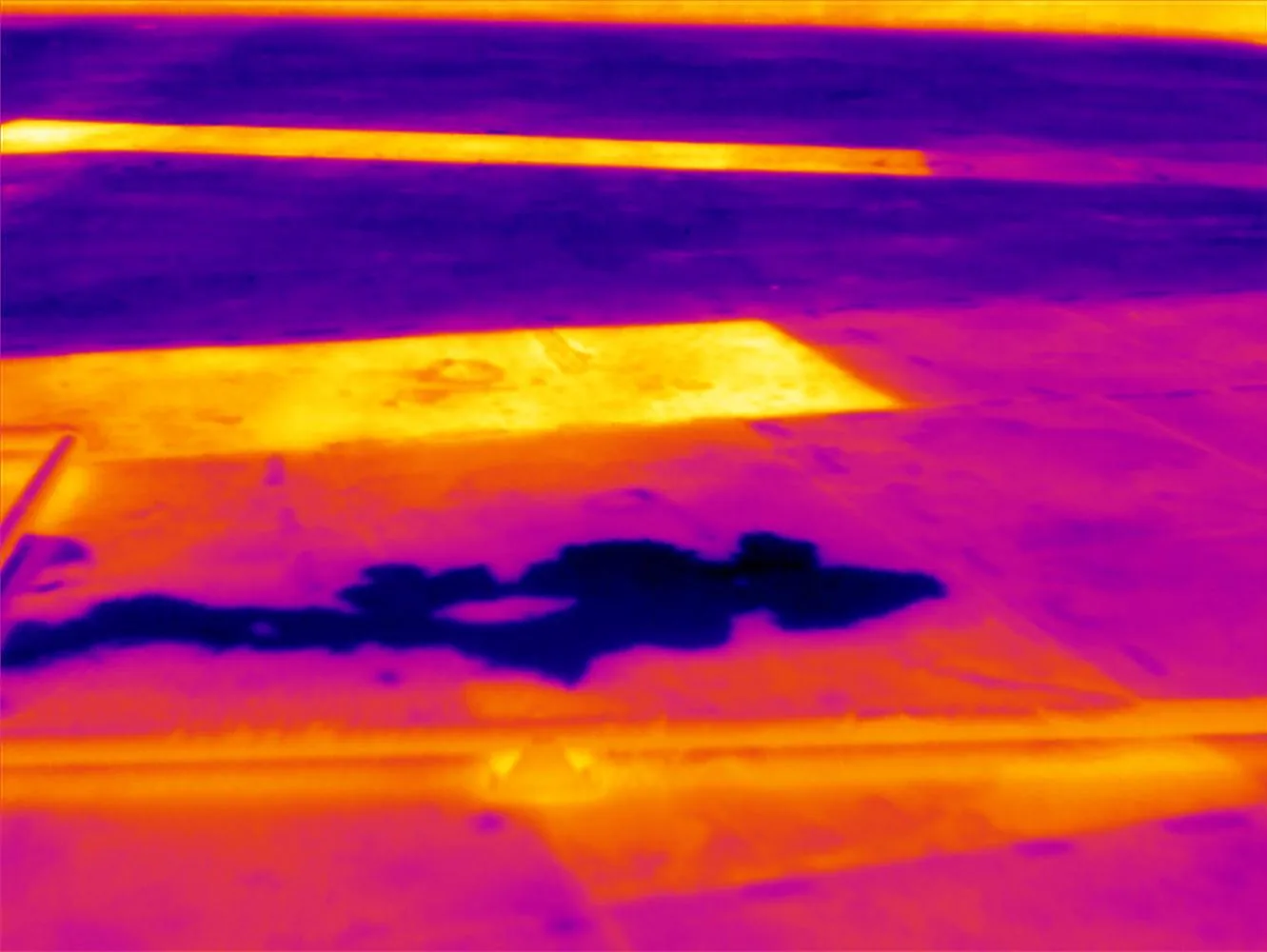
Look below the colors
Some roof assemblies develop useful thermal contrast after suitable daytime heating and subsequent cooling. Moisture within insulation can affect that response, but the direction, timing and strength depend on the materials and conditions. Surface finishes, old repairs, shading and equipment also change the image. A bright area therefore becomes an investigation location, not an automatic removal boundary.
We compare the thermal image with ordinary photographs and the roof layout. A pattern beside a curb may deserve a closer look at flashing and drainage. A pattern following board joints may call for assembly information. The written finding should explain that reasoning so another person can follow it without relying on the camera operator's memory.
Choose a useful window
Rancho Cucamonga has hot, dry summers and a cooler rainy season. That gives scheduling context, while the forecast and actual roof conditions decide whether a particular survey window is useful. Recent rain, cloud cover, surface water and changing wind can interfere with interpretation. The roof's construction may also make thermal screening unsuitable even when the evening looks pleasant.
During Santa Ana conditions, we review both access and the effect of wind on surface temperatures. We can postpone scanning or recommend another investigation method when the expected result would be ambiguous. Waiting for better evidence can be a sensible expense. We explain the scheduling reason before an owner pays for a survey that cannot answer the intended question.
Confirm selected locations
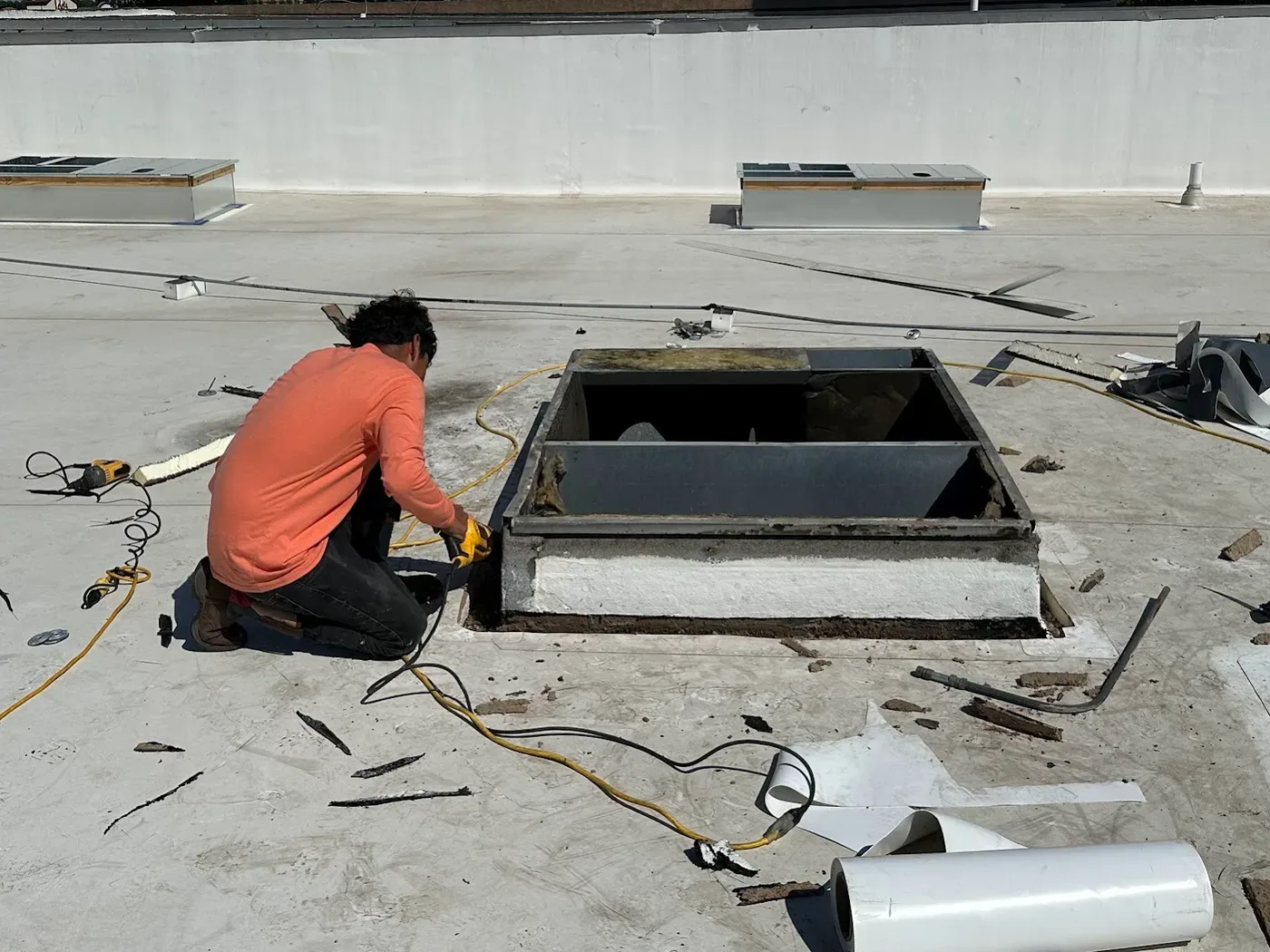
Confirmation starts with an agreed sampling plan. Depending on the assembly, that may include suitable moisture instruments, authorized openings or cores, and comparison locations. Instruments have limitations around metal and particular roof materials. A sample can reveal the layers and moisture condition at its own location, but it does not establish the condition of every neighboring board.
Before cutting, we agree on permission, safe access, compatible repair materials and the method for restoring each opening. The report records sample locations and their findings. If hidden layers remain uncertain, we identify the next investigation rather than stretching a few samples into a complete roof conclusion. This information is especially useful when evaluating a proposed roof recover.
Keep the report readable
You should receive a roof drawing that distinguishes observed temperature patterns, tested locations and interpreted areas. Paired images help connect the finding to an actual curb, seam or drain. The report should also record the survey date, relevant conditions, accessible coverage and places that could not be assessed. Those details determine how much weight the map deserves.
An estimated affected area needs its basis and limits. We do not turn the size of a thermal pattern into a confirmed quantity of wet board without supporting investigation. Where the evidence supports a repair scope, we connect it to insulation and cover board work. Where it remains incomplete, the budget includes a defined allowance or further checking.
Spend on the right question
A moisture survey serves a different purpose from tracing the entry point of an active leak. Hidden moisture and the opening that admitted water may be in different places, and the thermal pattern does not establish a travel route. For a current interior drip, leak source examination remains necessary. For a larger planning decision, we consider the survey alongside membrane condition and drainage.
Confirmed localized damage may support selective removal and rebuilding. A larger concern may justify additional sampling before comparing broader options. Neither a wet sample nor a mostly quiet image settles replacement by itself. The owner gets the finding, the unanswered question and the proposed next expenditure, with a reason for each.
Use the site plan
In the industrial area around Milliken Avenue, access arrangements can matter as much as the camera route. We ask the operator about equipment service, truck circulation, roof hatches and areas where an investigation would affect work below. At a retail property near Downtown Rancho Cucamonga, we coordinate access with the actual tenant schedule and identify the rooms beneath proposed sampling points.
A building in Montclair needs the same practical preparation: a roof plan, available repair records and a contact who can authorize the investigation. These details let us connect findings to useful choices. A buyer can include that evidence in a purchase roof survey, while an owner can pair it with a hands-on roof inspection.
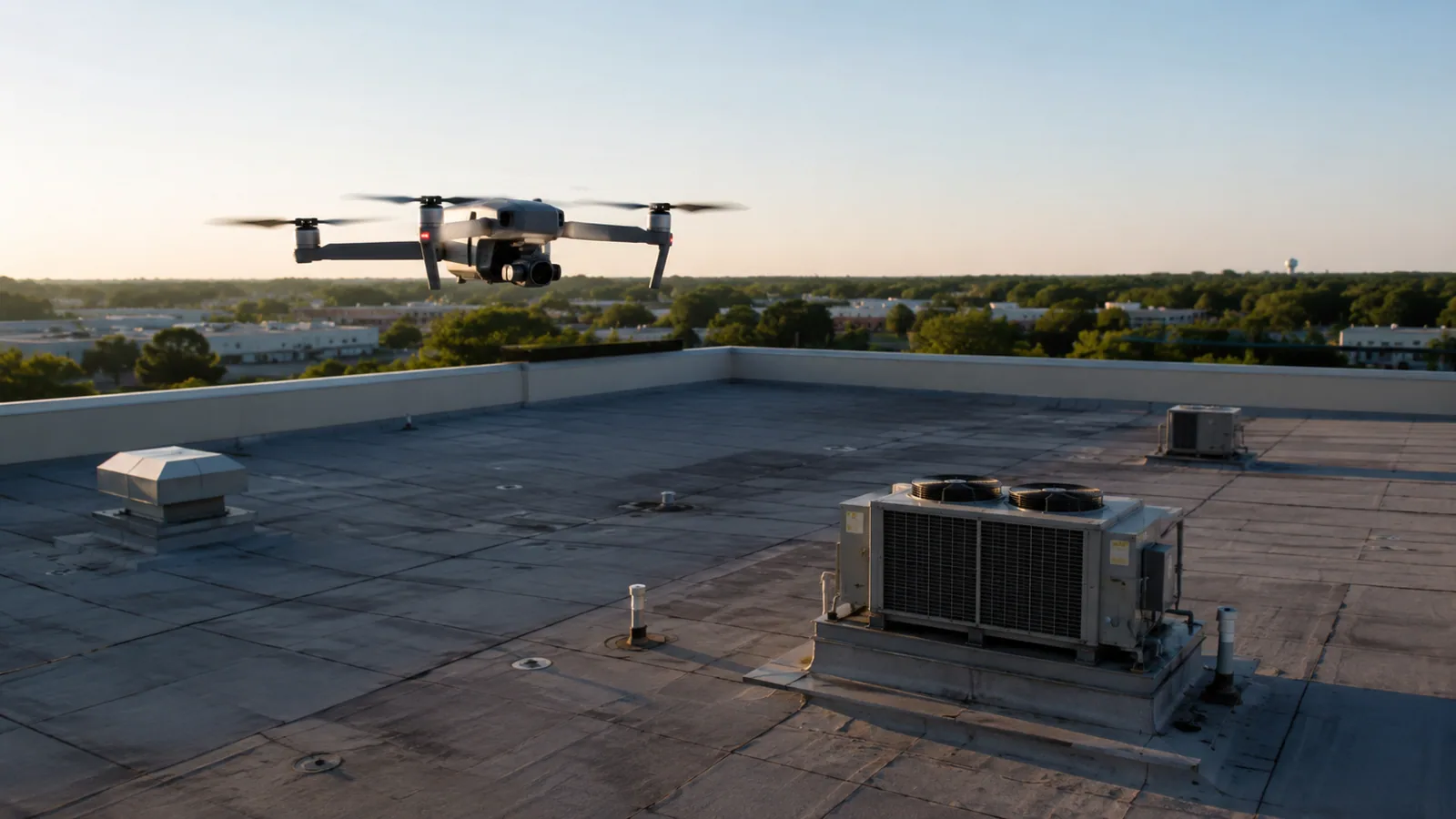
A useful flight or roof walk records the screening conditions alongside the map. Note recent sunlight, cloud cover, wind and the period since the roof received moisture; a temperature difference can have more than one cause. Draw a boundary around the locations chosen for physical checks and record each result against that point. If an opening confirms wet material in one area, do not automatically extend the same quantity across every similar-colored area. The report should show where evidence supports removal and where another test would answer the remaining question.
Make the next step explicit
The closing recommendation separates work worth doing now from items that can wait for the next budget cycle. If a sample confirms damaged insulation beside a failing detail, the proposal describes the removal limit, compatible rebuilding and remaining uncertainty. If the map offers little usable contrast, the report says what alternative investigation would help instead.
Keep the images and sample records with the roof file. Later findings can then be compared with an identified location and date. That record is useful when reviewing a new proposal, because it shows what was actually examined and avoids paying twice for the same unanswered question.
Commercial Roofing Questions
Can the camera confirm wet insulation by itself?
No. It records surface temperature differences. Suitable conditions and careful interpretation can identify locations worth investigating, but confirmation requires methods appropriate to the assembly. The report should keep those steps distinct.
Does a reflective roof prevent a survey?
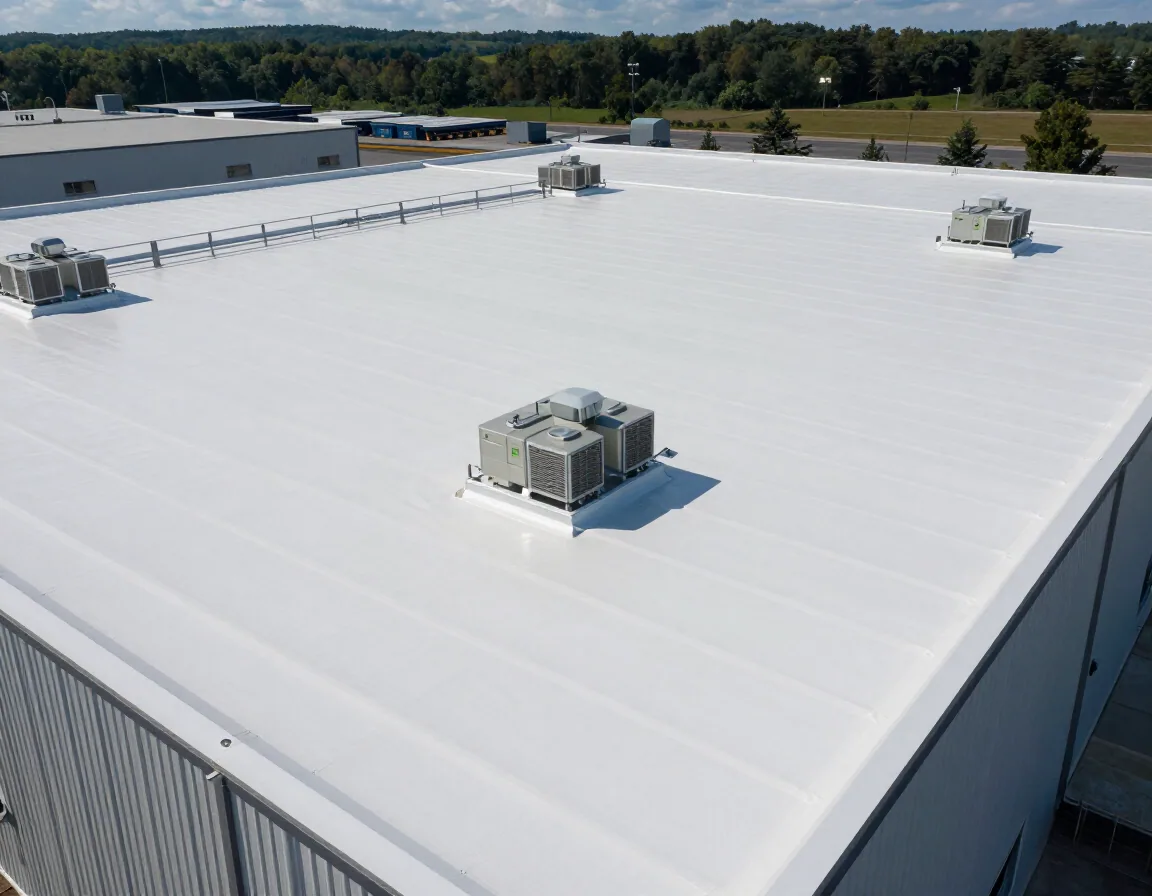
Suitability depends on the complete assembly and the available temperature contrast. A reflective surface can affect the response. We review the roof and conditions before choosing thermal screening, rather than promising that every white membrane will produce a useful image.
What happens where a core is taken?
The sampling scope includes authorization and a compatible repair method for each opening. We record those repairs with the sample locations. Access and weather arrangements must support restoring the opening properly as part of the investigation.
Does one wet sample mean replacement?
A single finding establishes a problem at that location. The next choice depends on its extent, the surrounding assembly, the membrane and the feasibility of selective repair. More investigation may be needed before pricing a recover or replacement.
What should a buyer ask for?
Request the survey conditions, coverage, interpretation and confirmation records together. A clear report explains remaining uncertainty as well as findings. That gives the buyer a practical basis for discussing further checks or a defined repair allowance.
Get a clear roof finding
Arrange a roof walk and discuss the question your survey needs to answer. We will explain suitable investigation methods and put the findings, next checks and spending choices in writing.